Wednesday, December 3, 2008

vacation reading: historical fiction, John Grisham, food and healing.

I just got back from a week long vacation and was able to indulge some of my current obsessions, historical fiction and food and healing. I also have a compulsive need to read John Grisham books on vacation and luckily his latest legal thriller is out in paperback. (I read the non fiction one a few vacations ago and... well... you can pass ha ha.) Anyway, here's a little about each of them.

The Virgin's Lover By Phillipa Gregory

Another silly one, this time about Queen Elizabeth and her supposed boyfriend and the plot to kill his wife and the chaos of her reign. I am gonna watch the Elizabeth movies again though!

The Appeal by John Grisham


This one was pretty tedious but there was a nice twist at the end which didn't result in a perfect tie up and I realized his books are pretty good about that. You think it's going to be some syrupy perfection and then although there is a positive outcome, it's not fantastic. I dig that. 

Now this was the mind blower. A really simply written but extremely thorough book that makes you feel smarter after every page. The first section looks at the health and longevity and lack of disease in cultures that have maintained their consumption of traditional foods and resisted the introduction of post agricultural revolution processes. Then it breaks down food production and the negative aspects of industrial farming and the positive aspects of naturally raised products.  Another section talks about nutrition as a healing strategy. It's all pretty awesome. The author is a naturopath influenced by Weston Price and is a big proponent of raw foods, not just raw vegetables but raw milk, organ meats, fish etc.. I feel rally psyched by a lot of what I learned from this book, now I just need to figure out how to include it in my life. 

Monday, December 1, 2008

the mysterious opera

clang! clang!


(click to enlarge the picture)

from Mondo Boxo, by Roz Chast


Sunday, November 23, 2008

Remix - Lawrence Lessig

Remix: Making Art and Commerce Thrive in the Hybrid Economy - Lawrence Lessig

Lawrence Lessig is a Stanford law professor and was one of the founders of Creative Commons. In Remix he advocates for copyright reform that would give individuals more latitude in quoting and copying media works for personal or non-commercial use. He pulls from recent writing on the impact of the social web, quoting liberally from The Wealth of Networks (Yochai Benkler), Wikinomics (Tapscott and Williams) and Convergence Culture (Henry Jenkins).

Taking language from computing he discusses culture in terms of Read-Only culture and Read-Write culture. Read-Only culture is made to be consumed, while Read-Write culture is participatory.

Copyright law in the US gives us a fair amount of latitude to quote written texts in our own writing. Quoting electronic media within our own electronic media productions is incredibly more restricted, however. The only chance we have for legally quoting copyrighted media is through the loophole of "fair use" which is so ill-defined that a defense on these grounds almost always requires the expense of a lawyer. As such, it puts corporations at an advantage and regular folks at a disadvantage. For young people today, making media is a form of writing though. Commonly available digital tools have removed the barriers to quoting from media. Upload sites such as YouTube, Vimeo, etc have removed the barriers to sharing these media productions. The products of the entertainment industry - movies, tv, recorded music - that were once Read-Only media are now Read-Write media. Contemporary folk forms such as Anime Music Videos (scenes from anime re-cut by fans as music videos) have sprung up (see Convergence Culture). In some cases media companies have eventually come to the realization that the enthusiasm and involvement of fans is something to be encouraged rather than outright prohibited. Opening up a company's intellectual property resources can be a business strategy (see Wikinomics).

Lessig wants copyright law to reflect the common practices and technologies of today. He wants kids to be able to engage actively with the media landscape without breaking the law. He recommends decriminalizing amateur remixing or quoting and simplifying the process of getting permissions for commercial remixes or quotations.

I remember Lessig's Free Culture (2004) being kind of a chore to get through, but Remix is very readable - I picked it up a few days ago and decided to drop the other book I was reading. On the other hand it feels a little superficial. When Lessig writes that he's not concerned about the kind of tracking and analysis that Amazon does on the metrics of site visitors I wonder if he's actually serious or just trying to come off as an average internet-shopping guy for the benefit of selling his copyright argument.

By the way, Free Culture was published (by Penguin) under a Creative Commons license but Remix is published (also by Penguin) under a conventional copyright license. Sort of wondering about that.


Friday, November 21, 2008

non-fiction and periodicals

way back in august i said i would post more about the periodicals and nonfiction i have been reading. here are some things i have been reading this year:

The Dip - Godin --- a book about when to push through the hard part and get to a better place, and when to identify it as a dead end and bail, and especially about the importance of knowing the difference.

Complete Idiot's Guide To Weight Training - multiple authors --- Been doing resistance training twice a week.

Own A Racehorse Without Spending a Fortune - Metzel --- Am somewhat interested in the horse business. turns out there are three businesses - breeding, pinhooking, and actual racing, which may or may not include claiming. pinhooking is buying a young horse and selling it as soon as it has won a race or two.

(Sound) Mag - I am a columnist for this regional music mag now...

Concert Tour Production Management - Vasey --- just started this one...

This Business of Concert Promotion and Touring - multiple authors - again, just started this one...

From Option To Opening - Farber --- One of my clients wrote a piece of musical theater, so I'm learning about this...

Tour Smart and Break the Band - Atkins --- Some good stuff in this book, and some total crap.

Narcotics Anonymous Step Working Guides --- I am in a weekly "step study" group studying this book...

The Lawn & Garden Owner's Manual - Hill and Hill --- I have never had a lawn and garden that I cared about before now, so I have a lot to learn...

Total Heart Rate Training - Friel --- trying to make my running more efficient and get greater gains from my training

You Can Do It! Make Money With Horses - Blazer

Become a Winner Claiming Thoroughbred Race Horses - Specogna

Investing In Thoroughbreds Strategies for Success - Kirkpatrick

Artist Management for the Music Business - Allen --- since this is my new fulltime job, of course I am interested in reading everything that is out there on this subject...

Performing Songwriter --- cheesy looking magazine that actually has great interviews with songwriters about their actual creative process, and a lot of other crap too

American Songwriter - slightly less cheesy but similar to PS above...

Portland Spaces --- magazine

Realms of Fantasy - magazine, kind pulpy even though it isn't on pulp

Tape Op mag

Giant Robot Mag

Paste mag

No Depression --- before they stopped

Sing Out! --- awesome mag in the deep folkie tradition

Sponsorship - NAWS, inc --- a book about sponsorship in Narcotics Anonymous

Essential Chest and Shoulders - Brungardt --- another book about weightlifting

Fantasy and Science Fiction - 60 year old sf pulp mag, like a great anthology every month

The Noahide Code - about the seven laws that all righteous non-jews should observe, according to Judaism - an older set of rules than the 12 commandments

Complete Idiot's Guide to Core Conditioning, Illustrated - Hagerman --- core conditioning is the most important part of my training regimen, because due to my bad back, i have neglected my "core" for many years

This Business Of Artist Management - Frascogna and Hetherington --- years ago when i started in the record business, "This Business Of Music" was the basic text that guided me through the musiz biz's esoteric laws and customs, so this seems like a good resource now that I am a music manager, no longer a record label dude...

Narcotics Anonymous - NAWS, inc --- The Basic Text of Narcotics Anonymous, perhaps the most important book in my life

iPhone: The Missing Manual --- this was helpful to find functionality in my iphone that i didn't know about

The Journal Of George Fox - Fox --- a very important figure in the early days of Quakerism

A Chosen Faith - Buehrens and Church --- About the Quaker religion

Just For Today - NAWS, Inc --- book of daily "affirmations" from NA texts and members...

The Noahide Laws: Understanding Humanity's Obligation to God - Toney --- More about the Noahide laws (Judaism is my favorite world religion but I am not interested in coverting, so I am instead interested in what Jewish thought and law says about gentiles)

The Path Of The Righteous Gentile - Clorfene and Rogalsky --- more about the Noahide Code

The Rainbow Covenant, Torah and the Seven Universal Laws - Dallen --- more about the Noahide Code

Sports Illustrated --- mag

The New Yorker --- this and the new york times have been my constant companion through my whole adult life, but I miss Tina Brown

The New York Times --- see above

An Introduction To Quakerism - Dandelion --- another book on Quakers, this one is both about the history and the ideas and the movement as it exists worldwide today.

Saturday, November 15, 2008

The Golden Notebook by Doris Lessing


Read Nobel Prize winning author Doris Lessing's classic work, the Golden Notebook, online here, in an interactive, critical format.

What is this?
It’s an experiment in close-reading in which seven women are reading the book and conducting a conversation in the margins. The project went live on Monday 10 November 2008.

Why are you doing it?
It’s part of a long-term effort to encourage and enable a culture of collaborative learning.

What do you hope to learn?
We don’t yet understand how to model a complex conversation in the web’s two-dimensional environment and we’re hoping this experiment will help us learn some of what we need to do to make this sort of collaboration as successful as possible.

And here is the rest of it.

George Being George


As literary lives go, Plimpton’s was a doozy. Well born, well bred, the father of four, a witness to the great, the good and the gifted, he epitomized the ideal of the life well lived. He sparred with prize­fighters and competed against the best tennis, football, hockey and baseball players in the world, and along the way he helped create a new form of “participatory journalism.” He palled around with Norman Mailer, Gore Vidal and William Styron, and drank with Ernest Hemingway and Kenneth Tynan in Havana just after Castro’s revolution. He also edited and nursed that durable and amazing literary quarterly, The Paris Review, which published superb fiction and poetry and featured author interviews that remain essential reading for anyone interested in the unteachable art of writing.

New oral history biography of George Plimpton out now

Tuesday, November 11, 2008

Smart Mobs - Howard Rheingold

Smart Mobs - Howard Rheingold
[...] many-to-many media confer a power on consumers that mass media never did: the power to create, publish, broadcast, and debate their own point of view. (197)
Howard Rheingold's Smart Mobs looks at how networked communications technologies are changing the way we live. Rheingold is focused on the transformative possibilities - increased participation in civic discourse and the creation of collaboratively created shared resources - but tempered with some skepticism about the implications.

He does not focus exclusively on the Internet but rather incorporates several related emerging technologies. He starts out with "Technologies of Cooperation," looking at origins of human cooperation. In subsequent chapters he discusses wireless internet, mobile technologies, pervasive computing (embedding processors in everyday things) and how trust and reputation are managed on online platforms such as eBay and Slashdot.

How have these technologies altered the way we live? One example is the way that cellphone voice communication and texting have changed our ideas of time and punctuality ("Is anything happening there yet?") ("Call me when you get here").

The style is accessible, if a bit breathless, with Rheingold framing his research as a personal journey. He's at Shibuya crossing in Tokyo watching crowds of people texting while crossing the street, then at a meeting with a developer in a high-rise, then hanging out in Helsinki... Smart Mobs was published in 2000 and the tone in some parts of the book is a tad dated already -texting and wireless Internet don't seem as amazing in 2008 as they did when he was writing - but the insights are still relevant. Despite a tendency toward techno-uptopianism, this is the best, most readable introduction to these topics that I've come across.


PDF article by Rheingold on cooperation and technology

Sunday, November 9, 2008

Dust Falls On Eugene Schlumberger


Scottish born, London reared writer Shena Mackay is in today's Guardian. She won the Booker Prize or was maybe nominated for one in recent history, for a book i didn't read...i do recommend Dust Falls On Eugene Schlumberger/Toddler on the Run (1964) and the Music Upstairs (1965). She was a teenager when these were written. Her early work reflects a distinctly mod(ern) female alienation and is set in South London. Music Upstairs is like what Julie Christie-as-Liz in Billy Liar might experience after she starts her life in London.
Trivia: Shena Mackay was on the cover of Jigsaw # 5 1/2 (1994). Thanks to Huggy Bear for introducing me to her. Thanks to Comet Gain for keeping her in the mix.
And here is the rest of it.

Friday, November 7, 2008

And the Hippos Were Boiled in Their Tanks


Attention Beat Lovers: Long lost William Burroughs-Jack Kerouac crime novel based on Lucien Carr has been published. It's supposed to be good! .

Thursday, November 6, 2008

Carolyn Chute: The School on Heart's Content Road


Carolyn Chute, author of The Beans of Egypt, Maine has a new book out. It was reviewed in the New York Times today. It's called The School on Heart’s Content Road and is available to request at yr local library. from the article:
I love people,” she went on, “but I don’t do so well in a system. We’re poor, and we lead a very different kind of life. We depend on other people so much. They come and bring us vegetables or whatever, and sometimes they tell us their secrets. They love Michael because he doesn’t look down his nose. If we’re in town, we’ll just sit in the parking lot all day, talking to people. That’s the way we see life: your community is your survival. And if you live in a small community like this, even the people you hate you have as friends.”
And here is the rest of it.

Saturday, November 1, 2008

My Current Reading List

Hello Bumpidee Readers!

I've been putting off posting about what I'm reading because the only thing I've actually managed to finish in the past month is another unsatisfying memoir but here is a hopefully brief list of what I've reading and/or thumbing through in recent weeks:

1. Cities of Salt by Abdelrahman Munif I am currently on page 64 and have been reading a chapter a day every few days for a week or so. It's really amazing so far....only 520 pages left to go, ha.

2. Today I read Admiral, a short story by T.C. Boyle. It starts off really great--this woman who has just graduated from college on scholarship finds herself back at her old high school job as a dog sitter for rich people. Nothing has changed, except her and the dog--it is a clone of the dog she used to care for. They hire her for $25 an hour plus full benefits because they are determined to recreate their dog's formative nuturing experiences. The premise is the best part of the story. It doesn't really go anywhere with this idea, but it's an interesting scenario to contemplate. I appreciated the race/class analysis in story about the ethics of technology/life. It's sort of the Mary Shelley Frankenstein theme, but updated to a reflect the mundane reality of working at a crappy job. That Boyle uses the worker's perspective to tell the story makes it sorta interesting.

3. I am also readingCity of Widows: An Iraqi Woman's Account of War and Resistance by Haifa Zangana, at an extremely slow pace. This book is very short, but extremely depressing. I feel an obligation to finish it, so I will do so and post a review some time in the next month of two, but it's very sad and so terrible to face the reality of how the U.S. war in Iraq has impacted people's lives. The focus here is on women, so it's really hard not to totally empathize, which is super heavy and fucked up. I find that it is really hard to get out of bed when I am in touch with the reality of U.S. foreign policy in the Middle East. I know that I am not alone in this, but I also don't know what to do. I really hope Obama wins, but even more than that, I hope that he wins and that he is able (and willing) to do what it takes to end this immoral, brutal occupation.

4. I checked out a few more books along the lines of City of Widows, but really haven't managed to get through any of them. They will probably go back to the library unread, solely because I can't face the world. I will try and read them at some point when I m feeling more solid. They are: My Guantanamo Diary: The Detainees and the Stories They Told Me by Mahish Rukhsana Khan and
One of the Guys: Women as Aggressors and Torturers
Edited by Tara McKelvey.


5. Poems by Stevie Smith and Mahmoud Darwish. Letters by Allen Ginsberg.

6. More graphic novels by Alan Moore and the Hernandez Brothers from the library. Yay for graphic novels being available through the public library system! I love these authors/artists soooo much that it is indescribably exciting to keep reading more and more of their work as the years go by. I remember how Love and Rockets changed everything. Reading fiction like this gives me faith in the power of the imagination. I truly believe some of the best fiction is being done in this format, it's still really exciting to me and I've been reading comics my whole life.

7. On top of all this, I just got another book of short stories by Jhumpa Lahiri and a copy of Decolonizing Methodologies by Linda Tuhiwai Smith.

Clearly not all of this will get read in it's entirety, but I am delving into this stuff deeply, exploring ideas, forming questions, seeking answers. Listening to how people tell stories, to the stories themselves and learning so much every day. You don't have to finish every book to learn from them. Sometimes throwing yourself into everything at once is a way to figure stuff out. I probably do that too much, but I've been pretty focused on my work lately, so I think it's productive for me.

I'm also still reading Naomi Klein's Shock Doctrine (which no one commented on so I stopped writing about) as well as The Darker Nations: A People's History of the Third World by Vijay Prashad, which is just really slow reading as I have to take all these notes. I guess I could post some of those when I have time.

Oh, the book I actually finished was Life with My Sister Madonna by Christopher Ciccone. It is hella trashy and I read it all in a single day. It made me feel really gross, but it was totally engrossing, ha. More soon I hope.

Thanks to everyone for keeping things going. I've been distracted because school started and I'm trying to learn how to speak Spanish, which if you are serious about, takes a lot of time. I also started a music blog in the form of my fanzine Jigsaw, here. Other than that I've been working and taking guitar lessons. Looking forward to a productive winter, full of reading and writing!!!!

Tuesday, October 28, 2008

Empire and Multitude

I was underwhelmed by Hardt and Negri’s Empire and Multitude. Its an anti-climactic feeling, because of all the hype. Reading these books was like listening to the new band or watching the new movie everyone has praised and finding out its not all that. I’m not saying they’re as bad as Lost in Translation, but they certainly aren’t Tout van Bien, or Charlie Chaplin.
I was mainly underwhelmed with Empire and Multitude because of the disjuncture between the aim of the books- theorizing the revitalization of the left- and its result; the theorization of the revitalization of the left. Call me a pessimist, but I think the Left has to do a little more then put on its post-modern prescription glasses to sort itself out
Hardt and Negri certainly do a good job of framing the problem- globalized corporate neoliberal rule over all aspects of life-but their theorization of overcoming it is inadequate because they somehow think updating Marx with Deluzean terminology and Foucaultian biopolitics is enough. That somehow this new postmodern frame- with its schematic talk of the post-modern biopolitical production of immaterial labour through networks as the basis of the new antagonism of empire and the multitude- will unlock our understanding of our current geo-political cluster fuck and make us suddenly aware that things are going to be okay because history is on our side. In other words, replace proletariat with multitude… and…. Wahla… history is still developing towards democracy for all.
The tragedy, then, is that this update of Marx, updates the most useless part. Hardt and Negri ignore vital Marxian concepts like alienation, fetishism, labour time, and the crisis-ridden nature of capitalism because they celebrate the libratory potential of immaterial labour. Its this view-point and their celebration of post-modern irony and carnival as the new politics- like their celebration of the papier-mâché street theatre puppets- and talk of the Seattle WTO protests that also make the works seem irrelevant and dated. This is grossly displayed in one of their examples of how the potential of the multitude is inherent in immaterial labour; their discussion of finance capital;

“we should note that finance capital also has another face, a common face that points toward the future…Finance capital…tends to function as a general representation of our common future productive capacities…Since finance capital is oriented toward the future and represents such vast realms of labour, we can perhaps begin to see in it, paradoxically, the emerging figure of the multitude, albeit in inverted, distorted form. In finance the contradiction becomes extreme between the expansive becoming common of our future productivity and the increasingly narrow elite that controls it. The so-called communism of capital, that is, its drive toward an ever more extensive socialization of labour, points ambiguously toward the communism of the multitude.”282


Unless the ambiguity of “communism of the multitude,” means further immiseration of the multitude, I have seen no communist potential in the continuing meltdown of financial capital. What I have seen is what theorist’s who use the Marxian concepts Hardt and Negri ignore- like Harvey, Jameson etc. long predicted; a collapse of the speculative bubble as an ensuing crisis endemic to capitalism.
Are Hardt and Negri then headed for the dustbin of history like contemporary neo-classical economics handbooks? I doubt it. Negri has been at it for years and has evolved with the times. I just hope in their future work, their understanding of the problem and their admirable optimism is tempered with complexity and a certain suspicion that the new- whether it is postmodernism or post-post modernism- may be necessary but its not inherently sufficient.
Meanwhile, here are two things I think are relevant to the current crisis; the knowledge that things have changed, which Hobsbawm soberly assesses

The interest in Marx seems a vindication, as his analysis of capitalism put its finger on globalisation and periodic crises and instabilities. Over the past few decades people thought the market would sort everything out, which seemed to me a statement of theology rather than reality. It's good that people are taking this kind of analysis more seriously than they have for a long time because it breaks with the conventional analysis that has dominated most governments and a lot of ideologies over the years. It's fun to discover that what one has been saying for a long time, and others have been pooh-poohing, is being taken seriously. But that isn't the important thing; that is to recognise that a phase of this particular world system has passed and we must think of another one. It will take a long time for it to settle down, but there is no way we're going back to where we were in the 1980s and 1990s, and that's a good thing.


And the knowledge that this change carries with it the potential and need for a new non-post modern, extra-representative form of politics, which Badiou polemicizes for:

The only thing that we can hope for in this affair is that this didactic power may be found in the lessons drawn from this grim drama by people, and not by the bankers, the governments who serve them, and the newspapers who serve these governments. This return to the real has two related aspects. The first is clearly political. As the film has shown, the "democratic" fetish is merely the zealous servant of the banks. Its real name, its technical name, as I have argued for some time, is capitalist-parliamentarianism. It is advisable, as several political experiments have begun to do in the past twenty years, to organise a politics of a different nature.


In other words, history isn’t over and it isn’t inexorable, it just happens and if we are going to change it and get rid of whatever succeeds neoliberalism, well we are the ones we have been waiting for.


Tuesday, October 21, 2008

Artist: Lil' Wayne, Song: Georgia... Bush

Artist: Lil' Wayne
Song: Georgia... Bush


Lyrics :

This song right here, is dedicated to the president of the United States of America
Y'all might know him as George Bush
But where I'm from, lost city of New Orleans... we call him this

[Ray Charles sample:] Georgia.........

Noooowww
This song is dedicated to the one wit the suit
Thick white skin and his eyes bright blue
So called beef wit you know who
Fuck it he just let him kill all of our troops
Look at the bullshit we been through
Had the niggas sittin on top they roofs
Hurricane Katrina, we shoulda called it Hurricane (Geeoorrggiaa) Bush
Then they tellin y'all lies on the news
The white people smiling like everythin cool
But I know people that died in that pool
I know people that died in them schools
Now what is the survivor to do?
Got to no trailer, you gotta move
Now it's on to Texas and to (Geeoorrggiiaa)
They tell you what they want, show you what they want you to see
But they don't let you know what's really goin on
Make it look like a lotta stealin goin on
Boy them cops is killas in my home
Nigga shot dead in the middle of the street
I ain't no thief, I'm just tryin to eat
Man fuck the police and president (Geeoorrrggiiaa) Bush
So what happened to the leverage, why wasn't they steady
Why wasn't they able to control this?
I know some fok' that live by the lever
that keep on tellin me they heard this, stole this
Same shit happened back in Hurricane Betsy
1965, I ain't too young to know this
That was President Johnson now
but it's president (Geeoorrggiiaa) Bush

[Chorus - 2X]
We from a town where (Georgia)
Everybody drowned, and
Everybody died, but baby I'm still prayin wich ya
Everybody cryin but (Georgia)
Aint nobody tried, there's no doubt on my mind it was (Georgia) Bush

Noooowwww
I was born in the boot at the bottom of the map
New Orleans baby, now the white house hatin, tryin to wash away like we not on the map
Wait, have you heard the latest, they sayin you gotta have paper if you tryin to come back
Niggas thinkin it's a wrap, see we can't hustle in they trap, we ain't from (Geeoorrggiaa)
Noooww it's them dead bodies, them lost houses, the mayor say don't worry bout it
And the children have been scarred, no ones here to care bout em
And fash out, to all the rappers that helped out
Yea we like it they callin y'all, but fuck president (Geeoorrggiaa) Bush
We see them Confederate flags, you know what it is
A white cracker muthafucka that probably voted for him
And no he ain't gonna drop no dollas, but he do drop bombs
R.I.P. Tay cuz he died in the storm, fuck president (Geeoorrggiiaa) Bush
See us in ya city man, give us a pound
Cuz if a nigga still movin then he holdin it down
I had two Jags, but I lost both them bi-tch-es
I'm from N.O. the N.O. Yea!

[Chorus - 2X]
We from a town where (Georgia)
Everybody drowned, and
Everybody died, but baby I'm still prayin wich ya
Everybody cryin but (Georgia)
Aint nobody tried, there's no doubt on my mind it was (Georgia) Bush

Monday, October 20, 2008

Two books about boys.

Recently I partially read (meaning skipped around and skimmed a lot) two books about dudes and their conquests. One was Into the Wild by Jon Krakauer and the other was Women by Charles Bukowski.

Into the Wild is a biography of Chris Mccandless, a guy who hated money and modern society so he wandered off into the wilderness, and then was found starved to death. Most of the information in the book is culled from diaries and interviews, and really, theres only enough of an actual story here for an article (which is what this book started out as) and the rest of the 200 or so pages is filled out with information about the regions and towns mccandless traveled through and accounts of other young men who have done similar things, including a personal account of the writers own Alaskan adventures. I expected that the book would paint the parents as snotty rich folk, but they are actually portrayed as blue collar people who worked their up to what they had. Basically, Mccandless was inspired to travel the country through authors such as Jack London, Ernest Hemingway or Henry David Thoreau. On one of his first trips he went to visit some extended family in Southern California only to find out from them that after he was born his father had carried on with his ex-wife and had another child by her. This is the turning point at which Mccandless decided that he hated his parents and after college he would cut them out of his life and go to live of the land, and that's basically what he did.

Women on the other hand is basically a book about an ageing poet that has sex with a lot of young female fans. Literally. What I read of it, every chapter was the same plot line applied to a different girl. It was just kind of gross and boring.

I mention these two books at the same time because Chris Mccandless lived and died following the words of authors that wrote about living off the land, and while Bukowski is writing about a very different set of male fantasies, his status as a writer that boys emulate is kind of the same. I am in no way an expert or even fan of any of these writers, I just find the idea of idolizing writers who were known to either be not such great people in real life, or never having really lived the stories they write interesting. And in the case of Mccandless, he demonized his parents lives over something that the authors he loved did too, and instead of living the life of one womanizer (his father) he decided instead to follow the fantasies of another.

Tuesday, October 7, 2008

Deer Hunting With Jesus, Dispatches From America's Class War

I recently rode my bicycle from Olympia to San Fransisco. I met dozens of people doing the same trip along the way. At night we would camp out at spots just for bike tourers and shoot the shit around the fire. Outside of Pt. Reyes CA I met two radical lesbian feminist from the UK. They gave me this book, Deer Hunting With Jesus by Joe Bageant. They were reading a book a night, all on the subject of American politics/culture. They were dumb founded that G. Bush was our president and trying desperately to understand why. They loved this book so I gave it a go. Joe does most his research from a dive bar in Winchester PA were factory workers from the local Rubbermaid plant drink there nights away. If I happened to sit next to Joe at the bar I would get up and move to a booth. I don't like Joe, but I think this subject matter is relevant. He hits the nail on the coffin when it comes to the financial crisis we are in currently in and gives some intimate accounts of poor working whites situation in Winchester PA. He should have sub titled the book, The War On the Working Poor. If you think to your self "those stupid fucking idiots" every time you see a McCain poster in someones yard, maybe you should read this book. It may help you understand and even empathize with folks.

Hey Joe, you should order a double shot of class war straight up and a social change back. xx kanako

Monday, October 6, 2008

ursula k. le guin in OLYMPIA

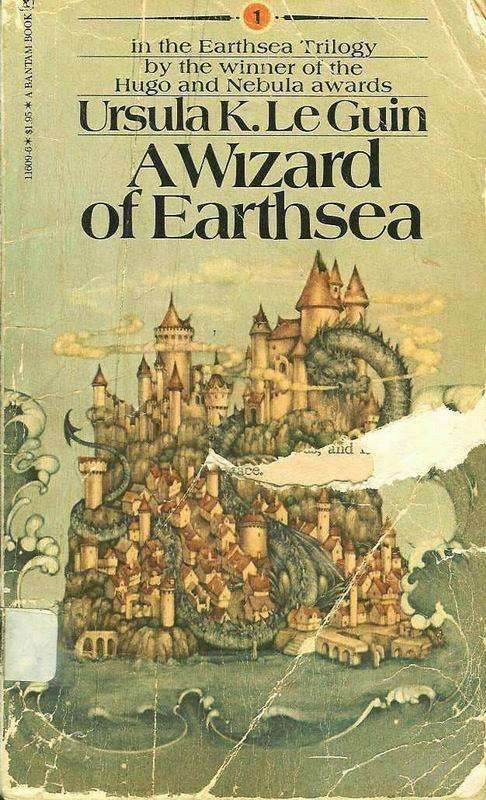
A Wizard of Earthsea by Ursula K. Le Guin

Photobucket - Video and Image Hosting


is this year's TIMBERLAND READS TOGETHER book.

She will be at the Washington Center for the Performing Arts this Friday, October 10th at 7:00 p.m.

This is a free event.
No tickets necessary.

She'll be reading from and answering questions about "A Wizard of Earthsea."

Fantasy is not my genre but I am trying very hard to read this book because Le Guin is famous for writing SciFi and Fantasy that feature feminist protagonists. I've heard that Le Guin doesn't make very many public appearances so I think this is a pretty rare event.

Sunday, October 5, 2008

The Pirate's Dilemma


The Pirate's Dilemma: How Youth Culture is Reinventing Capitalism by Matt Mason

"DIY is changing our labor markets, and creativity is becoming our most valuable currency." (p 31)

This book is like the evil twin brother of Anne Elizabeth Moore's Unmarketable. It too is about the relationship of underground culture to marketing, only rather than a critique it is more of an inspirational/motivational/how-to-compete-in-the-new-world manual. Sometimes he seems to be addressing "the kids," other times it's closer to a corporate consulting spiel.

Mason's idea of "pirates" is broad and he brilliantly weaves together pirate radio, pirated DVDs, graffiti, open source software, illegal downloads, game modding, punk, and a game theory model called "The Pirate's Dilemma." What his pirate examples have in common is that in each one a practice threatens the players in an existing market by doing business outside the rules of the market. This puts the existing companies in a "Pirate's Dilemma." Something like this... people pirate just-released movies, press them as DVDs and sell them on the street. The movie industry is threatened. But the fact that people buy these DVDs just proves that that there is a market for low-quality DVDs of brand new movies. The non-pirates have to decide whether to fight the pirates or start to compete like a pirate. If they fight the pirates - for instance, try to shut them down legally - the best the industry can hope for is a return to the market conditions they had before the pirates. But if the existing companies put on their pirate hats and start acting like pirates then they are competing in their old market (say the movie theaters) and in the new market opened up by the pirates (DVDs sold on the street the same week that the movie is released). The pirates look like a threat but actually they do everyone a favor by opening up a bigger market.

His examples are of kids, artists, underground culture, etc but it all comes back to a marketer's view of the world.

He writes that the "The Situationist notion of making art indistinguishable from everyday life is now known as branding." (p 21) But that's only if you accept that advertising = art. Not really what the Situationists had in mind.

In the fashion industry he says that cheap knock-offs of designer wear actually do the designers a favor. Once the rich and stylish people see that other people have cheap versions of their designer clothes then the clothes are obsolete and they are ready to buy a new round of new improved designer clothes. The new outfits will be exclusive at firsts but then also be knocked off and easily available. This is how pirate's drive innovation. Which is wonderful, I guess, if you are a fashion designer or a boutique. For the rest of the world it's just cycles of consumerism, built-in obsolescence and more crap for the landfill.

He starts off with the idea of "punk capitalism." His two examples are Vice magazine (and its spin-offs) and American Apparel. The idea is that "punk capitalists" do what they want without concern for an audience. They're not afraid to be obnoxious or offensive and money is not their prime motivator. They put "purpose next to profit." Fair enough, I guess, even though I think that Vice and American Apparel are pretty horrible examples. It's great that because of American Apparel you can easily buy non-sweatshop t-shirts. The company has other progressive policies as well. But is it really so punk to build the company's image around an aura of sexual exploitation? But even going with these examples the problem is that Mason doesn't discuss the economics of autonomy. Can a business really pursue "punk capitalism" if it isn't independently owned? How long can you "do what you want" if it's not delivering the goods for a parent company?

Mason is an entertaining writer and he goes on convincingly about grime, pirate DJs in London, hip-hop clothing lines and graffiti. But he calls Linux an "open source company" though, so he may actually be bluffing through a lot of the youth culture stuff too.

One pirate reference he does not work in is Hakim Bey's use of the concept of "pirate utopias." Which doesn't really fit anyway; because he's interested in the efficiency of markets, not freedom, transformation or resistance.

Despite my criticisms, I think this is an amazing book. All along the way I would think, "Oh, that's cool if you are a capitalist who wants to learn from youth culture, but how can I reverse-engineer what he's saying and get something out of it?"

Tuesday, September 30, 2008

Cristy Road's "Bad Habits"

I can't remember the first time I met this wacky Florida girl Cristy Road who had named herself after the Green Day Song "Christy Road", but I think the first time I heard of her was '97 or '98. She used to call the mail order phone at Lookout and want to talk about Green Day and all things related. Rop, always willing to indulge a girl in the cutest of ways talked to her every day I think. The legend is she would call every day after school and yap about anything on her mind. She's still sort of like that, only now she's an amazing and accomplished artist and published graphic novel author. Rop likes to take credit for turning her on to riot girl and we can let him, 'cuz I think we're all luckier for it.

Her new book "Bad Habits: A Love Story" is out now and she's doing readings all over the place including one at my local barnes and noble this Thursday! I'm so proud!

Friday, September 26, 2008

Hot Love: Swiss Punk & Wave 1976-1980

I got this book for the Maximum Rocknroll archive after seeing it at Ooga Booga, and having looked through it over the past few months still feel like I haven't gotten to the bottom of it. Kleenex/Liliput were the only band I really knew about from Switzerland, and I think that band offers such a complete world inside a record in terms of their aesthetic, sound and band idea that in my mind there had to be more similarly minded bands in existence that just didn't get recorded or recognized. The book is huge, like two phone books split in half maybe, and set up like a scrap book. So there are tons of pictures of cool looking punk girls, homemade bondage shoes, fliers and zines, degenerate squats and collapsing practice spaces... Ramona from The Mo-dettes has an excellent piece that covers the history of her punk life, from art school in Geneva to the London squat scene.... I actually had no idea she was Swiss; she named herself are seeing The Ramones play, which is so dreamy. She just makes being in The Mo-dettes seem like endless kicks and mishaps that brught to mind the nature of their sound, complex, thoughtful, rambunctious pop music. It's great reading a complete other history of that era from the perspective of a woman who was in one of my favorite bands; I don't know, sometimes it seems like punk is eulogized by THAT SAME DUDE in a way that takes it out of reach and makes it into some weird weighty HISTORIC EVENT that is not open to participation or question. My favorite thing about the book was the fractured nature of the presentation, the millions of voices and ideas and images. It really represents to me the possibilities that DIY culture offers. Also the fact that it (punk? DIY culture?) works better/is more exciting and expansive when it exists in the cracks outside of 'rock' history... There is a great roundtable between all these women from the scene, fanzine writers, guitarists, singers, artists... including Sara from TNT who are a band you HAVE to investigate! Total insane punk lady vocals and falling apart music... Marlene from Liliput/Kleenex (there's the dreamiest picture of her in Bazooka bubblegum shirt, leopard print pants and jean seberg haircut in total transfiguration of ready for action guitar hero pose...)At anyrate this book offers a refreshing perspective on what punk is or was or could be, and speaking as someone who is totally immersed in a world which sometimes seems so defined and concrete tomb like in doctrine and costume this book was a reminder of potential realities, punk rock as an endless adventure.

Thursday, September 25, 2008

The Girl I Left Behind: A Narrative History of the 1960’s and How Women Transformed America by Judith Nies


I have been reading this on and off for the past few months and it is (also) overdue at the library so I'm trying to finish it up. While I enjoy the feminist memoir and 1960's cultural history, and am sort of obsessed with "second-wave" feminism, this is not a particularly thrilling or radical example of that kind of thing.
First off, who is Judith Nies and why do we care what she thinks?! I'm half way through the book and I'm still trying to figure it out. Her point of view and life experience is biased by her privilege, but she's smart enough to try and position herself accordingly. Unfortunately, there are still some things she seems to miss, but no one is perfect I guess, at least she is trying...and though it may be be my own position in the world (white, American, fortunate enough to have the opportunity to travel outside the U.S. occasionally and to be in school, etc) that enables me to tolerate her limited perspective--I find her story compelling. Maybe it's because I don't actually know any women like this, despite knowing several her age.
She frames her memoir as a record of feminist transformation. She says she wants her daughter to understand how things changed for women in her lifetime, and how those changes were accomplished through feminist movement. She doesn't just focus on gender, but discusses imperialism, specifically the war in Vietnam, and world affairs generally. Her discussion of race and class is predictably less than complete, but it is in there, some, though it is also glaringly absent at times. Her class analysis tends to focus more on the difference between the upper middle-class (her circumstance) and the billionaires who run the world than on any kind of sustained critique of how economic stratification is maintained by global capitalism and what that means for the lives of ordinary working-class people; which is another severe limitation of her work. This informs her idea of what feminism is, so you have to be kind of critical when you are reading it if you don't want that to seep into your consciousness.
The book starts out with the discovery she has an F.B.I. file and then back tracks. She obtains a degree in International Affairs at a time when most educated women were placed in secretarial or teaching positions. Had she been better connected, she would have probably found work at the C.I.A. or perhaps the Pentagon--she studied with Condoleeza Rice--instead, circumstances lead her to study abroad, where she meets people who were critical of U.S. imperialism (see the history of U.S. and Iran, Guatemala and later, Vietnam) Shortly after the Gulf of Tonkin resolution passes, she goes back to the US to seek employment. She ends up working for an employment agency, probably because of the amount of time her and her friend spend trying to find meaningful work for women with master's degrees. It's 1966, she just had an illegal abortion in Italy and is reading Tom Wolfe at work. She promises herself she will quit her office job and move to Washington D.C. as soon as she finishes the last chapter. That's about how far I have gotten. As I understand it, she ends up working for the first Senator who opposed the Vietnam War, with all of the obligatory sexual harassment that kind of work entailed at the time (and probably still does). Not sure what happens next, but I imagine she becomes a mom, divorces her husband and becomes a feminist, faces challenges in a professional field dominated by men--not necessarily in that order.
While this book has its limitations--some may find her younger self's naivety about the world not as endearing or incredibly interesting as she seems to think it is--her attempt to locate her personal story in its social context is a worthwhile pursuit; as is her effort to document the social history of her generation. So, while it's not my favorite by any means, and I wouldn't recommend it to everyone, if you are interested in the experience/thoughts of someone like this as well as the subject matter, then it's worth your time. It actually reads pretty fast, it's just taking me too long to finish it because I am reading, like 20 other books, all the time. I'm sort of scatterbrained like that.

Here are a few other books that I think are better, if you are into memoirs by radical women of the 1960's

With the Weathermen: A Personal History of the Weather Underground by Susan Stern

and local favorite:

Outlaw Woman by Roxanne Dunbar-Ortiz

p.s. I'm also reading Freewheelin' with Bob Dylan by Suze Rotolo, which I absolutely LOVE


--And here is the rest of it.

Unmarketable: Brandalism, Copyfighting, Mocketing, and the Erosion of Integrity

Unmarketable: Brandalism, Copyfighting, Mocketing, and the Erosion of Integrity - Anne Elizabeth Moore

This book is overdue to the library and I've been putting off returning it until I could take time to write about it. The problem is that there is so much I want to say.

Unmarketable is about the intersection of corporate marketing and DIY/underground culture.
Moore gives examples of instances when advertising agencies have created campaigns using graffiti (both legal and illegal), appropriated imagery and phrases from punk bands, and hired underground artists/writers/zine makers to create work or run events.

It's not as simple as pointing out the sell-outs... she acknowledges that the slippery slope is dotted with what seem like sensible trade-offs. She even writes about her own experiences running a zine-making workshop sponsored by Starbucks.

In contrast to corporately-produced culture she returns again and again to an idea of undergound/DIY cultural production as being defined by integrity and passion. To me, this is too simplistic. Blatant self-interest is also a driving force, for instance. People do things partly for cred... cultural capital (Pierre Bourdieu) or subcultural capital (Sara Thornton). I don't think this diminishes the importance of this kind of work. (I also don't think it's necessary to claim that the products of the DIY/undergound sphere are more entertaining, involving or of a higher artistic quality than the products of the mainstream culture industry.)

As part of the connection between marketing and underground culture she criticizes the Adbusters-type detournement of advertising. At its most simplistic, this takes the form of something like the "Joe Camel" ads remade as "Joe Chemo." Her view is that as an anti-consumerist message this type of work is counterproductive: "Just Don't Do It" fails as an anti-Nike statement because it reinforces the centrality of Nike and their slogans in our culture. In this way, corporations benefit from brand recognition regardless of whether the association is positive or negative.

She holds up Ian MacKaye and Dischord as examples of underground integrity, both for the usual reasons and also particularly for avoiding what she would consider the pitfall of responding to a major corporation's appropriation of their imagery.

When a major athletic shoe company ran an ad campaing that blatantly appropriated the cover of the first Minor Threat 7" Dischord got them to halt the campaign but did not sue or seek money damages.

A lawsuit or settlement would have meant that Dischord had a) set a price on xxxx's use of the imagery, even if it was after the fact and b) allowed the US courts to decide the matter. It also would tie Minor Threat/Dischord to the shoe company in the public discourse. Following from the argument Moore builds about brand recognition - even when such recognition is not positive - being the top priority for corporations the athletic shoe company would benefit from their brand being tied to the name Minor Threat.

Dischord's response - to just accept that the ad campaign was pulled and then drop the subject - is fascinating: in an economy based on participation, withdrawal becomes a form of resistance.

This has parallels to the idea of exodus discussed by Hardt and Negri in Empire, and the kind of anti-protocological actions discussed by Galloway in Protocol.

Moore doesn't really go into online culture but the rise of the social networking sites is even more insidious in terms of how cultural resistance is exploited for corporate ends.

I am glad that this book exists, especially because Unmarketable comes from within the sphere that it speaks about: Moore is a fanzine maker and a former writer/editor/co-publisher of Punk Planet. I would like to see more serious attempts to understand and strategize independent/underground cultural production that come from and are directed at the participants.

Tuesday, September 23, 2008

The Physics and Psychophysics of Music


Do books for school count? This is the sort of book I'd probably pick up to browse through at the library, but I don't think I'd check it out. So it's good to have to read it for a class I'm taking on acoustics. I love acoustics and psychoacoustics and neuropsychology, so the book is very intriguing. I guess it's considered a seminal book on the subject. It's written by a physicist but there's very little physics or math. I don't understand all the formulas and charts, but the verbal descriptions are easy to comprehend. I'm only on the second chapter, though, so maybe it will get tougher as I continue reading.

Sunday, September 21, 2008

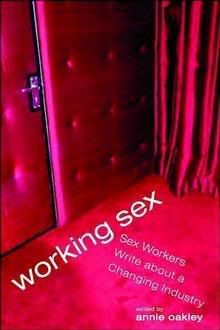
working sex: sex workers write about a changing industry

considering the source, i had very high expectations of this book. the height was merited.


Photobucket - Video and Image Hosting


from the introduction by annie oakley:
"Sex workers telling stories, humanizing ourselves through the sharing of experience and insight, punctures the bloated dream of consumption without consequence. It puts a real face on the mythological creatures that are the subject of so much fantasizing and demonizing. It moves us from a weird landscape populated by iconography of people's fears and desires to a tangible, relatable reality; and only from there can we begin to be taken seriously as people deserving of safety, agency, and respect."

Saturday, September 20, 2008

On Prisons, Borders, Safety, and Privilege: An Open Letter to White Feminists

Borders (or, Who Crosses, and Who Cares)

"Prominent white feminists often say they are organizing against violence, for safety. So where have they been while working-class immigrant women have been pulled from their homes and workplaces, often separated from their young children, in immigration raids across the United States in recent months?

Brownfemipower of Women of Color Blog has written extensively about how popular white feminist bloggers failed to quickly and substantially cover the specific damage done to women during a major immigration raid in New Bedford, Massachusetts, early last year. New Bedford was not an anomaly: immigration raids -- many of them marked by multiple forms of violence, including surprise attack; immediate separation of parents and their young children; racist and sexist abuse of people held in binary-gender-segregated immigration-detention facilities; deportation itself; and the creation of the constant fear that the next one could happen anywhere, anytime -- are happening all the time, all over the United States.

Immigrant communities are living in near-constant fear, with little "safety"; women and trans and gender-nonconforming people are suffering gender-based violence at the hands of federal immigration officials; and the movement for immigration-policy reform is arguably the largest mass movement in the United States today.

Where are white feminists?

As far as I can tell, white feminists' "solidarity" with the immigrants' rights movement amounts to occasionally featuring a woman who works at an immigrants' rights nonprofit in a publication or panel, and occasionally mentioning a sensational case of violence against a particular immigrant woman on a blog. I was at the mass May Day marches for immigrants' rights in 2006 and 2007 in Los Angeles, and I saw no notable presence of any of the major U.S.-based feminist organizations. In 2007, I could find no mentions of the upcoming marches, or report-backs the next day, on popular feminist blogs. Hundreds of -- some places millions -- of people were on the streets for social justice. Where were white feminists?"
.

This is an excerpt from a powerful piece written for Make/Shift by Jessica Hoffman.

I just subscribed and ordered all the back issues. I will post more soon, but wanted to post this today because it feels urgent.

Where Wizards Stay Up Late


Where Wizards Stay Up Late - Katie Hafner and Matthew Lyon
I picked this up because while I was reading Protocol I decided I wanted some more background on how the Internet was developed . It is literally a blow by blow account of the building of the Internet, funding, hardware decisions, development of protocols, etc. The authors make the case that the Internet was not developed specifically to withstand a nuclear attack (as has often been said) but rather to be a reliable network for sharing scientific research. This is despite an early 1960s report by the Rand Corporation that focused on the need for a distributed network to keep military command and control intact in the event of such an attack. It is a good read up to a point but the authors go way overboard in the amount of personal detail about the various engineers and programmers - down to what they ate, their quirky behaviors, etc. This would be fine if the story centered on a small group of people that you followed through the book, but the book introduces a couple dozen people so it ends up being a clutter of superficial details. I did like the image of electrical engineers in the 1960s using the symbol for electrical resistance as an anti-war statement though.

Friday, September 19, 2008

Protocol: How Control Exists After Decentralization

Protocol: How Control Exists After Decentralization - Alexander Galloway, MIT Press

The internet continues to be framed in terms of its radical potential - the smashing of hierarchies, the expanded access to information, the ability to participate in public forums.

Galloway, however, theorizes the Internet in terms of its "materiality" - its hardware and operational protocols - in order to uncover how mechanisms of control are built into its structure. While TCP/IP - the protocols that govern how packets of information are broken up and find their way across the web - distribute control, DNS - the Domain Name System that resolves World Wide Web domain names into numerical internet addresses - is strictly hierarchical. For Galloway, a "protocological" analysis is one that focuses on what is possible or allowed in the system, rather than on the meaning or content of individual messages within the system.

In a society that increasingly falls into a distributed network mode rather than the decentralized hierarchies of the modern bureaucracy, such an analysis has implications outside of media technology studies. Galloway includes several examples of art/activist responses that test the limits of the system.

Wednesday, September 17, 2008

MOVIE PARTY!!!!

I throw MOVIEPARTY around a lot. Thats what I call my blog, thats the 'brand' I put on my videos and as of lately that is what I am calling my night at Dunes. I'm currently trying to do a monthly screening of videos and films at MOVIEPARTY created by and for feminists movie enthusiasts. The first of these screenings will be held November 6th. I'm posting this in hopes that people would like to submit things for this event. if you're interested please contact me at nadiabuyse@yahoo.com


Monday, September 15, 2008

yow!


Zippy strips here and there
.
.
.
.
.

Fast Food Nation by Eric Schlosser

I finished this book a couple weeks ago. It surprisingly came off as relatively non-biased, even though it takes on an industry that is not only unfavorable but basically terrifying. Almost every aspect that this book covers of the american food industry has a sympathetic character at some point, from owners of franchises to cattle ranchers. It's definitely one of those fact-confirming books, like everyone has ideas about the horrid things that happen within the food industry, and this confirms it, and then goes into detail about it. Some things that were mega-interesting to me was that the flavor of most food (the processed kind) is completely designed and engineered in a lab and that the difference between "natural" flavors and "artificial" flavors is basically non-existent. It was also really fascinating to read about how the "cleanest" meat usually ends up in fast food and that the gnarliest meat, the stuff that can't be sold to the general public, is instead used in school lunches. I know that this idea is obvious and everything, but it's completely deplorable that this country puts so little value into education, even down to the food that's provided. School food always makes me think of this time I had a job taking yearbook photos, and I was at some Olympia school working and they had a huge cart of vegetables in the main hallway, and it was totally fine for kids to just leave class for a vegetable break and go and grab some carrot sticks. It was the coolest thing ever!!!!!

This subject also makes me think of the slow food movement. There are a lot of aspects that I completely agree with and am excited about, such as making a connection between what's on your plate, where it came from, and how it got there, or sustainability, or the idea of preserving regional differences and stopping the homogenization of the world. However, and slow food advocates continually deny this, but there is such a huge class gap in this that I feel like a lot of these ideas are rendered useless. A couple weeks ago there was this whole slow food festival weekend, and past the fact that they made some of the civic center grounds into a garden, almost nothing was free. All the workshops and lectures and stuff were all in the $20 range, while actual slow food meal parties or whatever tended to land in the $50 range. The parts of the population (and I'm mainly talking about the U.S. here) that would benefit the most from education about these ideas, and implementing these ideas into everyday life are poor people and people below the poverty line, and at this point the slow food movement doesn't seem to have taken the time to reach out to and include these populations into the movement. I think it would be much more valuable and revolutionary to take these basically anti-corporate ideas and make them so they weren't so built for upper-middle class.

Sunday, September 14, 2008

American Psycho - Bret Easton Ellis

Just finished it the other day, then re-watched the film. I was surprised to notice that the screenplay was written by two women and the director was also a woman. The book is incredibly darker - much more horrid and sinister than the film, the latter which merely skims the surface of a story and character that is so complex and chilling. What I enjoyed most about the book, er, appreciated, er, not sure what word to use - well, of the writer's strategy, was the slow build regarding the character's psychotic tendencies, how well these were blended in with a constant barrage of brand names, designer label references, and the insidiously vapid conversations of the rich and bored New York elite. I'd seen the film years ago and was struck by Bale's incredible performance, so I had him in mind as I read, (which wasn't particularly difficult as most of the dialogue in the film was verbatim from the book) and then re-watching the film gave me an even deeper appreciation of Bale's range and abilities. But the reason I wanted to read the book is that there was a question that my first viewing of the film had left unanswered - and it still is...

Saturday, September 13, 2008

Too Cool To Be Forgotten? Hmm....


Too Cool To Be Forgotten by Alex Robinson is a recent graphic novel about a middle aged man (40) who gets hypnotized to quit smoking and finds himself a 15 year old in 1985--back in high school again. I got it at the library because 1) I'm a sucker for time travel 2) the character is my age (class of '87) 3) I was hoping the story might offer some interesting insight into the 80's/00's youth/middle age 4) I'll pretty much read anything in comic book form ....
...well it's really not good! oh well. I mean, I guess I would recommend this if you are stuck somewhere and have to kill time, but it's full of uninteresting cliches, bad storytelling and doesn't have much to say, generally. I was thinking that the art, while not great, was probably the most interesting part, but then Pete Best picked it up and said "this art is terrible". ha! I mean, that could have been a stylistic assessment, but I took it to mean it wasn't done well, which is something I'm not really qualified to evaluate...still, I do think this drawing is the best part:

Anyhow this brings me back to one of my themes, which is, I'm not sure how to evaluate a work of fiction here, other than to express a personalized reaction to it. Your thoughts?
Also, I know there are some comics fans on here...taking suggestions! I think I have to stop checking out things featured in mainstream entertainment magazines.

Wednesday, September 10, 2008

Blogs/websites etc.

This blog has introduced me to a lot of good books. I really appreciate reading everybody's discussion of them, but with each new post I also get slightly dismayed, because my dream of reading every good book is made progressively more impossible.

This blog also made me realize I do a lot of reading on the internet. I know I'm not alone in this, so I was hoping people would let me know about what blogs/websites they love. I don't know if there are as many good websites I've never heard of as good books I've never heard, but I would sure like to find out. Please divulge away.

I'll start by plugging my newest exciting discovery. Its not a book or a blog, but since many of us went to Evergreen, lets just say its a text and include it. What I'm talking about is the Pacifica radio show Against the Grain. I had never heard of it until earlier today when a friend texted me assuming I had listened to the recent episode with Slavoj Zizek. After he told me what he was talking about, I downloaded the Zizek episode and an episode on Decolonization. Both were excellent. Now I can't wait to dig into the rest of the show's massive archive which includes topics like Social Movements, Feminism and War and Tolstoy's anarchism. They're gonna be awesome.

Tuesday, September 9, 2008

Reward & Punishment: American Hunger

since my office moved i've been listening to an assortment of library Books-on-Tape while filling orders. i've picked up a bunch at random, just whatever is on the shelf and i discovered i'm pretty picky. on our last tour, joaquin-the-roady & i listened to Crime and Punishment as read by some British dweeb. it was terrible (and annotated) and i knew it would be bad because i had already listened to the whole thing once-- on the spider and the webs europe tour--but on tour you get so sick of listening to each other talk that putting on a book on tape is sometimes the most effective way to achieve a moment's peace--so we endured it to the end and now i will never be able to read Dostoevski without hearing a British thespian pronounce Russian names in a snooty, over-dramatic accent! oh well, i have a tendency to dislike classics-in-translation but force them on myself as a regimen--still the audio book seems like cheating, if doing push up's on your knees is cheating--maybe it's just exercising different muscles?

well, this is all to say that all the audio books i have started have been insufferably bad and since i'm not in van-jail and have access to infinite pod-casts, radio shows and mp3 playlists, i haven't finished them. i did, however, check out a Book-on-CD of Louis Menand essays (which i don't recommend as an audio book) called American Studies and became intrigued by his piece on Richard Wright....I read American Hunger a few weeks ago, then discovered it is the second volume of a two-part biography that is now available in the revised-edition of Black Boy. American Hunger was censored by the Book-of-the-Month club. Wright was the first African-American novelist to have work available through the club, but when he submitted his autobiography for their consideration, he was told he needed to take out the parts about his involvement in the American communist party and that most of the sex would be censored--as a result, American Hunger (part 2 of Black Boy) was published as a separate edition, after he died. so I read the second part first and now am reading the first part second. i haven't read any of his fiction yet, but his life story is intense, as is his need to read as a means of psychic survival. the writing is pretty real, it will hit you in the gut. here's an example, he's writing about how his mother's early death impacted him:

"At the age of twelve, before I had had one full year of formal schooling, I had a conception of life that no experience would ever erase, a predilection for what was real that no argument could ever gainsay, a sense of the world that was mine and mine alone, a notion as to what life meant that no education could ever alter, a conviction that the meaning of living came only when one was struggling to wring a meaning out of meaningless suffering."

i highly recommend spending an afternoon or two on it if you haven't read his work yet.

so the lesson is, even though these Books-on-whatever format other than paper seem to suck, you can still discover cool stuff, so i guess it's worthwhile and i'm going to keep exploring the medium. but i am taking suggestions for audio books! i have had bad luck even with books by authors i know i like. i think it is its own particular format and needs to be thought of in that way. clearly that is the case. does anyone listen to them regularly? please advise.

Monday, September 8, 2008

What comes first-the music or the words?


I've been reading Alan Moore, along with a bunch of other stuff.

Tuesday, September 2, 2008

joshua plague and local zinesters at the olympia timberland library

Vegan Cooking Demo & Zine Reading with Joshua Ploeg, aka "Joshua Plague"

my fabulous co-worker Kelsey has put this program together...

Traveling vegan chef, food writer, musician and zinester Joshua Ploeg will demonstrate vegan cooking techniques. Joshua sang for hardcore bands Behead the Prophet and the Mukilteo Fairies, has published several cookbooks and zines, and worked as a food columnist. Local zinesters will read their work following the demo. If you're curious about independent publishing or vegan cooking, please join us!

the other three local zinesters who are reading:
Zach Mandeville (he writes funwater awesome)
Chelsea Baker (works at danger room comics and makes minicomix)
and Nicki Sabalu (wrote a zine about working in new orleans after hurricane katrina).

Event Type: Adult Program
Date: 9/6/2008
Start Time: 2:00 PM
End Time: 4:00 PM

green getaways with V.C. Andrews


Escaping from NY is a common theme for many of us who live here in the city. It's wonderful to have so many places to go within just a few hours of train or driving but everything requires lots of detailed planning and can be a pain in the butt! We decided to make this weekend "green" by taking our bikes on the train to go back and forth to the beach (only 3 miles from the hotel we were at.) Yay us!

Anyway, one of the sweet not too widely known about spots is Greenwich Point Beach, easily accessible from the Old Greenwich metro north train station. Besides being a relatively quiet beach visited by mostly locals, having a decent snack bar with veggie burgers as well as your standard dogs and fried clam sandwiches, it has a lending library of books beach goers have left behind. The pickings were pretty slim but I was happy enough to stumble upon Garden Of Shadows by V.C. Andrews.

I actually never read Flowers In The Attic when I was a kid although I did see some part of a movie version at some point. It seemed creepy and I never did like the idea of confinement, preferring tales of greenery and liberty like The Secret Garden and Ballet Shoes. Garden of Shadows is a fantastic read as in, it takes 2 seconds to finish and is super creepy (incest, god, sexism) therefore entertaining, but how can it be for kids??