Showing posts with label punk. Show all posts

Tuesday, May 22, 2012

Violence Girl by Alice Bag

Alice Bag wrote her memoir Violence Girl as a series of blog posts. She doesn't consider herself a writer. In that sense, this is a DIY punk book!

Growing up in the 80's hardcore era, The Bags were not well known to me for some reason. I don't know if their records were out of print or what but I don't remember hearing them until after Bikini Kill started. At the time, the NW was extremely isolated and there were huge gaps in my knowledge of punk history, which was not yet well documented and largely accessible only through private collections and oral history. I don't remember The Alice Bag Band from The Decline of Western Civilization for some reason either. I saw the movie a few times as a teen, once when it showed at Evergreen before I started going to shows (possibly when it came out?) but I mostly remember Darby and Black Flag. In the late 80's/early 90's Olympia got a video store and suddenly you could rent a handful of punk movies, which we circulated to no end (along with Over The Edge, which we watched constantly.) When I interviewed DC punk/artist/photographer Cynthia Connolly for Jigsaw in the mid-90's she talked about going to shows in LA and raved about how influential Alice Bag was. That's when I started wanting to know more about The Bags and more about some of the female contributions to the early LA punk scene that I had missed out on by being too young and not living in California. So this book was a revelation to me. I wish it would have been around when I was a kid but it's really cool that it's available now.

Violence Girl doesn't talk about punk until you are already over a hundred pages into the story. I remember yelling on the couch: "SHE IS TALKING ABOUT PUNK ROCK!!!!" But the build up is great and the book totally pays off. Up until that point we get to know her as a misfit Elton John freak growing up in East LA not fitting into the Chicano/a community she was born into and we get the complicated story of her family, which was loving but also filled with violence. She writes about her experience with candid honesty, wisdom and humor. Another aspect of this book that I appreciated a lot was getting to hear about Alice Bag's life long interest in philosophy. One of the most exciting moments of the book for me was hearing her recount her falling out with Darby Crash, for philosophical reasons, who made fun of her because she believed in god. (She was raised Catholic, he was a Nihilist). When she performed and read from her book at the Olympia Timberland Library I hoped she would talk more about this but recognizing that someone probably doesn't want to talk about their dead friend in a public setting I didn't really want to bring it up in the Q&A so I just asked her to discuss philosophy a bit and she talked about how she has always been a very philosophical person, interested in exploring ideas and really analyzing what things mean. This tendency really comes through in her book, which is constructed as a series of anecdotes that are insightful as well as entertaining.

If you don't know about her Women in L.A. Punk site you should totally read everything on it, it's completely great and inspiring.

The Gospel of Anarchy by Justin Taylor

The Gospel of Anarchy goes from a sexist softcore porn male fantasy tale of dumpster diving Floridian punks in Gainesville to magical realism...that centers around a cultish version of anarchist-Christianity...? After taking that turn it gets really boring. Like Jonathan Franzen or Mary McGarry Morris, the writing style is bleak, dystopic, vacant…not so much my thing...if this is a critique or depiction of the vast American suburban emptiness and alienation of sprawl, then ok but it feels sort of cheap, cliched and cynical. The characters are hopeless and don't seem fleshed out. Like, if we live in a giant hamster wheel of chain stores along the interstate…we are still human right? So where is the humanity in this story? As far as dystopia goes, I like Stepford Wives, because at least there is an analysis of power happening and it's funny and clever. I don't know if the mysticism of this book really gets to anything real. When I looked up the author it seems that he is kind of a poseur who doesn't get it...like alternative rock representing the underground to the mainstream…he lives in Brooklyn and supposedly no one in Gainesville has ever heard of him but he seems to get ok reviews and know a lot of MFA-ified literary people? As much as I hate to give a book a bad review in its entirely, I guess I have to give this one a thumbs down. I really didn't like it. Another reason to seek out punks who write fiction I guess.

Friday, March 26, 2010

Totally Wired by Simon Reynolds


Totally Wired was published last year, but I just got around to reading it now. As the front cover says, this is the "essential companion" to Reynold's previous book on post-punk, Rip It Up and Start Again, with "Post-Punk Interviews and Overviews." The best way to experience this book is to read it in segments. Pick a few interviews, skim the rest. Then when you have some time, really sink into it and read it from beginning to end. There is a logical sequence to the chapters, and so it helps to read them in order. But it's also great to read chapters randomly. There are interviews in the beginning and then some extra chapters with writings from Reynolds that weren't in Rip It Up and Start Again or are re-workings. Totally Wired works well by itself or as an extension of Rip It Up.

Having been a big NME fan in the late 1970s/early 1980s (I read it religiously every week), a lot of these interviews reminded me how much music - and music writing - back then was focused on trying to move music forward in new directions. The music mattered... and so did the ideas. There are often moments in music history when this happens. In this case, the explosion of creativity and innovation that leapt forth from the sparks of underground rock music, glam, free jazz, dub reggae, funk, electronic music, and punk in the 1970s pushed music into the future.

The peak post-punk years as Reynolds sees it were 1978-1984, and I'd agree. I definitely recall a huge transformation around 1978-79, when punk was morphing into something more experimental and atonal. The music still maintained the emphasis that punk had on short, basic songs that dealt with society or politics or everyday life, but the format of basic rock n roll or pop was subverted in different ways. As in Rip It Up, Reynolds makes the connections among proto-punk and no wave bands in the U.S. and post-punk bands in the U.K. But what's really interesting about Totally Wired is that it becomes clearer how there were commonalities among what various people were listening to or reading. It goes to show that there's a certain zeitgeist, with people in different places affected by similar things until it all coalesces in some way at a certain point in time. Or maybe that's the mythology Reynolds wants us to believe.

The interviewees include: Ari Up (Slits, New Age Steppers), Jah Wobble (PIL), Alan Vega (Suicide), Gerald Casale & Mark Mothersbaugh (Devo), David Thomas (Pere Ubu), Tony Wilson (Factory Records), Bill Drummond (Big in Japan, Zoo Records), Mark Stewart (Pop Group), Dennis Bovell (producer), Andy Gill (Gang of Four), David Byrne (Talking Heads), James Chance (Contortions, James White and the Blacks), Lydia Lunch (Teenage Jesus and the Jerks, Beirut Slump, 8-Eyed Spy), Steve Severin (Siouxsie and the Banshees), Nikki Sudden (Swell Maps), John Peel, Alison Statton (Young Marble Giants), Green Gartside (Scritti Politti), Gina Birch (Raincoats), Martin Bramah (Fall, Blue Orchids), Linder Sterling (Ludus), Steven Morris (Joy Division, New Order), Richard Kirk (Cabaret Voltaire), Alan Rankine (Associates), Paul Haig (Josef K), Phil Oakey (Human League), Martin Rushent (producer), Edwyn Collins & Steven Daly (Orange Juice), Paul Morley (NME), Trevor Horn (producer).

Read this book, and let it inspire you as it did me. Despite whatever you may feel about Reynold's writing, he does a great job of capturing the essence of what made post-punk music (and the music associated with it, such as art punk, industrial, synth pop) so liberating and meaningful. The fact that so much of this music is still influential or relevant to people today is proof of its lasting impact, beyond retro nostalgia. Sometimes we have to look back in order to move forward.

There are tons of great YouTube clips of these bands. Since the book is named after a Fall song, here's one of my favorite Fall songs to get you started: "Rebellious Jukebox" from their 1st LP Live at the Witch Trials..."I'm searching for the now"...


Thursday, February 4, 2010

Girl Power: The Nineties Revolution in Music by Marisa Meltzer


Girl Power traces the influence of OG "riot grrl" groups (Bikini Kill, Bratmobile, Heavens To Betsy) to the Spice Girls, covering "foxcore", Sleater-Kinney, Le Tigre and Ladyfest as well as several other pop stars and other all-female alternative/indie rock groups along the way.

The book is written for a mainstream audience and suffers from some of the awkwardness that comes along with trying to explain this stuff to the general public. Marissa comes across as a former indie-rocker who felt she didn't really fit into the punk scene, yet was invigorated by the feminism (and celebration of girlhood) that happened during riot grrl. This makes sense, as she admits she found out about the movement through Sassy (her previous book is a love letter to the pro-girl teen magazine) She argues that riot grrl's "media blackout" led to its demise and wishes that the original groups would have stuck around and tried to find a larger audience. Describing an experience of seeing Sleater-Kinney play to 13,000 people, she recalls wishing that riot grrl had been able to sustain itself. Paradoxically, she acknowledges that, while the Spice Girls were cool in some ways, their "girl power" was limited to marketing and questions what that means in terms of empowerment. Quoting Kathleen Hanna, she points out that buying a Spice Girls notebook is not going to change the world. This makes me wonder what would be different if it had been Bikini Kill notebooks the girls were buying.

I knew Marissa around 96/7 when she lived in Olympia and had a cute all-girl accapella group called The Skirts. In the interest of "full disclosure"--I was a big Skirts fan and she was my favorite member! It was a weird time period. It was interesting to read her take on things as someone who admits (somewhat reluctantly) that she moved here to go to Evergreen after getting into riot grrl and even "semi-stalking" Kathleen. I wish she would have told more of her own story here. Her voice comes through loud and clear when she is critiquing what she calls the elitism of independent culture. She belongs to the camp that believes that it's exclusive to play basement shows, failing to see how this can be a more inclusive model. By booking our own tours and creating a DIY feminist network through the mail, Bikini Kill encouraged girls to meet each other and start their own scene. Sure a "scene" can be clique-ish and Olympia was/is no exception, but the idea we were were working with is that if we can do it here, certainly you can do it where you live. Only a few bands can get on MTV or sign to a major label. It's far more populist to encourage kids to put on shows where they live and take their own work and friends seriously. To her credit she does acknowledge that Ladyfest was a successful attempt to take this idea to another level.

I was interviewed (via email) for the book and am quoted a lot, which is kind of embarrassing, as I don't think what I'm trying to say really comes through, which is partially my fault, not thinking about who the audience for the book would be and just neurotically rambling on to her about how strange it is to have been a part of something that had such a big cultural impact. I remember telling her how weird and hard to talk about a lot of this is for me without going into a lot of detail. I tried to explain my perspective. On the one hand you want to take credit for your work, especially because women are encouraged NOT to take credit for anything. On the other hand, it's embarrassing. Sometimes I feel like I'm lying when I talk about this stuff because what actually happened is so surreal and bizarre that I often have a hard time believing it myself.

Personal weirdness aside, I think it's cool that someone wrote this book for a mainstream audience. My hope is that teenage girls and young women who don't know this history will get inspired to find out about riot grrl. It would be really cool if it inspired girls to create a new young feminist movement rooted in their generation.

The book made me think a lot about documenting history from a strategic perspective. How could this story be told to incite participation in girls? A big part of the original "girl power" idea, was to get girls to stop being consumers of male-dominated culture and start producing our own. I guess my fear is that this kind of pop-culture history could encourage girls to simply consume "girl-culture", thereby claiming the identity of "riot grrl" or "feminism" through the act of buying a record, as opposed to starting their own band or fanzine or putting on a show. To me the point is to encourage girls to start their own young feminist movement, not just to copy what we did. That is the danger of nostalgia I think...

So I'd be interested to hear what people think about this. How can we tell our story without feeding into this consumer-oriented nostalgic trap? Or is that inevitable?

Saturday, January 30, 2010

Just Kids by Patti Smith


Like Bob Dylan's Chronicles Volume One, this is a remarkable book for us longtime fans and I hope it is merely the first volume in a longer series of memoirs. Patti Smith the poet, rock-n-roll star, mother, artist, icon, rebel, myth maker and performer gives us her own coming-of-age story the way only she could have told it. Wow. To sum up what she says would be to deny you the pleasure of how she says it. This is her first prose book and mostly covers the period in her life from 1967-1973, when she was photographer Robert Mapplethorpe's best friend, lover, muse, co-conspirator and partner-in-crime. It's a love story that celebrates the miracle of finding each other at the exact right moment in time and making the most of it, living as fully as is possible on very little means but a lot of determination and sheer will, which takes the form of desire as well as desperate need.

I particularly enjoyed reading the cultural history--they lived on the streets of New York City in the summer of love, ended up in the Chelsea Hotel with leftover from the 50's beat poets and Woodstock era rock-n-rollers, hung out at Max's Kansas City on the fringe of Warhol's fading Factory scene, knew theater people from Penny Arcade to Sam Shepard--their work led them to the high society art-industry and the underworld of CBGB's respectively. This is all well-documented and /or made mythic here, depending on your interpretation of the book. You can expect cameos by Jim Carroll, Richard Hell, Tom Verlaine, William S. Burroughs, Allen Ginsberg, Harry Smith, Jimi Hendrix(!), Grace Slick, Bobby Neuwirth & Janis Joplin to name but a few…

Another thing I liked about the book is how it covers the economic reality of being an artist and having no money. It describes the daily situation of what that was like in this time/place in lucid detail: the hunger pains, the shoplifting, the shitty jobs, unemployment, the shared sodas and hot dogs, bad diner coffee and late night donut shops, the alleyways, fire escapes and park benches--you will recognize the daily hustle of the punk--the artist as scavenger...as gleaner...as thief.

But the most fascinating part of Just Kids is Patti Smith's riveting re-assemblage of their personalized iconography and shared aesthetic universe. From Blonde on Blonde and the French symbolist poets in Patti's case and Midnight Cowboy to Michelangelo in Robert's--this is a meticulous inventory of their inspirations, visual & literary obsessions, hang up's, hang out's, freak-outs, textures, trinkets, wall-hangings, record & book collections, loft-apartment dwellings, (separate) pilgrimages to Paris/San Francisco --providing the reader with a fleshed-out, clear aesthetic lineage of their lives as insurrectionary artists who were gripped by influences both "high" and "low" and were able to fuck shit up, in the best sense of what that can mean. From how they moved and talked to what they wore and how they held themselves on the street, the way they lived their lives and what was important to them carried itself into their work, which in turn, ricocheted in the culture, changing the world we live in. Study this as a road map of two people who took the raw material of their lives seriously enough to live as if what they did mattered--it is the story of two artists who made work that mattered. Their art is the record of this commitment, to themselves, to each other and ultimately, to the world.

Oh yeah, I guess it's not too much of a spoiler to tell you that this is also a truly sad book, as Robert Mapplethorpe died of AIDS in the late 80's, but in my view this gives the book urgency despite the life-crushing sadness that it must have brought to those who knew and loved him. To live anything less than a full life in the face of such as tragic loss…well that is the struggle we all must contend with in this world on a daily basis…that is mortality, the conditions under which we all live. (for some, like Patti Smith, this is a religious matter, but for me it is merely existential...) At any rate I find Just Kids life-affirming despite its documentation of deep, dark despair.

This is a truly awesome work. It will give you the ammunition you need to fend off the square "hipsters" in our midst. I hope young people take it to heart and I know those of us who have been around the block will be sustained by this for years. Use it as rocket fuel...space is the place…the transformation of waste...it's right here, man. Let it surround you and become your daily imperative to create. In the immortal words of punk rock patti smith "I step up to the microphone and I have no fear".

Wednesday, November 11, 2009

Gimme Something Better: The Profound, Progressive, and Occasionally Pointless History of Bay Area Punk from Dead Kennedys to Green Day

Gimme Something Better: The Profound, Progressive, and Occasionally Pointless History of Bay Area Punk from Dead Kennedys to Green Day by Jack Boulware and Silke Tudor

I picked this up when I went to North Carolina and it was the perfect cottage cheese for the brain book for reading while traveling. Nothing puts me into a more comfortable, contented state than reading about a music scene.

The title pretty much gives you an idea of the scope of the book... which is a pretty broad history really. It is one of those oral histories that is entirley composed of quotes: no introductory statements for the individual chapters, no background information or context to place the interviewees... The author/editors keep in some conflicting statements - different memories, interpretations - but I also wondered if they basically knew the story they wanted to present and just culled the quotes they needed to do that...

I've listened to a lot of the music, saw the bands on tour and read some of the zines at the time, but a lot of the context of the scene was totally new to me... I never knew anything about The Farm, never went to the Vats, etc etc. Someone from DRI lived in a tree? My band played in the bay area a fair amount in the 90s including at Gilman a couple times but according to what I read my assumptions about the scene surrounding it were pretty far off base.

The most interesting image I was left with was that two of the big forces shaping and instigating things were older guys - much older than the teen and twenty-something punks - Lawrence Livermore of Lookout records and Tim Yohannon of Maximum Rock-n-Roll. I'd like to read some sustained reflections about that... Was this involvement of an older generation part of punk and hardcore in a lot of scenes? What does it mean when a "youth moment" is intergenerational? I wonder what some of the contributors to the bumpidee reader think about this too? When is perspective, experience etc a productive thing and when is it just the past imposing its ideas on something that's emerging according to different experiences?

Thursday, March 19, 2009

Punk Rock: An Oral History by John Robb


i have read about two hundred pages of this in the past week and i have to say, it's one for the fans!

you don't get a lot of second-hand analysis of what it all meant, but rather a reflective play by play account of how it all went down by those who were there.

in case you don't know who john robb is, he was in the membranes, this is about the english punk scene...

as with any oral history, my favorite part is listening to those involved track their influences. studying aesthetic lineages in punk is one of my favorite pastimes. it involves hours of research and hanging out, studying the private record collections of people who have been around longer than you, asking them questions, listening to how they discovered what means the most to them and learning how what they unearthed evolved into their own art and how it provided them with the tools to create a meaningful existence and try to change things via participation...to be more than a consumer...to realize your place in history....that history forms you ...and then to try and use that same methodology to impact future history...to use being in a band or making a fanzine as a way to create the world you want to exist...and to recognize that this is totally possible because it has happened before and it will happen again.

there is something i miss about the pre-internet times. people used to come over and hang out because i have a lot of records and they were interested in the stories behind them. now i post anecdotes online for whoever to read, but i am less upfront in some ways, because who wants to share intimate details and acquired knowledge with faceless strangers? i used to have entire friendships based on talking about records. now it seems like people are vultures, waiting to get 'your list' so they can go home and secretly download it and wait to mention it to you again after they have read the wikipedia page!!!! like, 'hey have you heard this'...hmmmm, maybe (quickly google) then they come up with some kind of 'informed anecdote' and formulate an opinion based on being indifferent and detached...i feel like people are so dismissive these days. i hear people dismiss the sex pistols (johnny rotten, so amazing!) or subway sect (Vic fucking Godard!!) or the damned (the Captain!) or sham 69 (jimmy pursey's first sentence in this book: I Was Born Punk!!!!!) or generation x (Tony James!) or the ramones or patti smith even and i'm like, seriously get over yourself! what Do YOU LIKE? duran duran? donovan? the shirelles? i like (some of) that shit too, but it does not compare to punk! i mean, if they are young kids in groups starting their own scene then this would be a healthy rebellion, but most usually they aren't. they are just consumers who aren't in bands. or if they are in bands, they don't challenge the status quo, they uphold it. that's not punk. it's poser.

i'm not saying that pop music isn't ever transformative or meaningful...but it is punk that gives us an entry point into the culture. pop keeps us on the outside looking in, fulfilling our prescribed roles as consumers...fans. punk demands that we act and question 'the way things are'...to get out of the audience and destroy the stage! at its worst it's cacophony and aimless, ignorant rebellion. at its best a means of active resistance, a meaningful life, community, participation. you win whether it's good or bad then, innit. as a style it might be tedious, but as a method it's always fresh because it allows the dispossessed, often in the form of the kid, to intervene in the world (i.e. start a band) however they see fit at the moment they are alive.

anyhow, there are still aesthetic evolutions, but they are less linear and the chronology is sorta confusing, in that anyone can reference any tradition from any time period sorta instantly....which is really overwhelmingly exciting yet simultaneously so daunting as to make you not even care enough to try...well that is sometimes how it makes me feel. i wrote about this recently, but who cares how many mp3s you have on your hard drive if you can't even listen to them? the upside is we get these extreme trends like all the awesome screamers-influenced bands of the early 2000's. but sometimes it just comes off like pastiche or tribute bands.

and what will future oral histories have to tell us?

"I remember when that one blog said bla bla bla and then I downloaded bla bla bla and that's how it all started"

boring.

so this book is reminding me that the stories and how we tell them to each other are what it's all about....if we don't do anything except check email or listen to 'demos' on myspace and watch everything on youtube and occasionally see people we know at 'the bar' then really, what is happening?

i want to use the internet for storytelling, i try to do that, but it seems like people are looking for instant gratification rather than impact. i have a lot to say, all the time about everything...i want it to sink in. i think books are best for that kind of storytelling. but friendships can be good for that as well...

"remember that time we all drove to portland to see unwound and then the car broke down.... and someone had a gun in the back yard and the cops came.... and then your mom got pissed because we were late but she didn't know that we lied to her... and then i bought the zero's record but left it at the 3rd street house and then the frumpies wrote that single based on 'cosmetic couple'..." etc so much better than 'remember when we checked our email and then went to work and then went to the bar and then came home and checked our email again'.

i like the idea of doing stuff just so that you can have something to remember later...that has always worked for me as a motivating factor. pretend your life is a movie and you are a fictional character. that is what this book is reminding me...the difference between real life and a mediated, virtual existence. punk to me=real life living. to be alive, to be open, to care enough to fuck shit up.

oh, and that i fucking love the clash:

let fury have the hour/anger can be power...don't you know that you can use it?


WHAT ARE WE GONNA DO NOW!?!???

Sunday, March 8, 2009

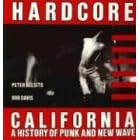
Hardcore California


i have been staring at this all week, remembering that this is how i found out about a lot of women-in-punk that i had missed out on in the 80's or had little knowledge of...not there is a ton of focus on this in the book, but that there are photographs, names...giving proof that women were a part of hardcore

what i hate about hardcore today, is how women's role in it hasn't seemed to change. you will still find very few female guitar players or singers in hardcore and a whole lot of bass players. there are not that many all female punk bands that are considered to be hardcore, but there continue to be a handful of groups who last for a short time and maybe make a demo tape. there are still a lot of women behind the scenes, putting on shows, taking pictures, putting together zines, cooking dinner for bands and all that.

hardcore reinvents itself over and over and over again, but the formula doesn't change and girls stay on the sidelines.

why?

if girls started to take over hardcore, like they started to take over rock-n-roll in the early 90's, would everyone declare hardcore to be dead and move on to indy, pop, drum and bass, noise or electro-clash? if so, how long would we have to wait for hardcore to be legitimate again? 10 years, 20 years?