What happens when punk rock feminism travels across international borders?
Cambodian Grrrl: Self-Publishing in Phnom Penh tells the story of Anne Elizabeth Moore's trip to Cambodia to teach zine making to teenage girls. I saw Anne read at the Olympia Timberland Library before I read Cambodian Grrrl. I remember feeling like the audience for the book was white, privileged Americans and wondered if her reading would have differed had the crowd at the library been more diverse. Reading the book, I questioned how the teenage girls in the book would represent their own experience of the zine-making workshop. Most of all, I wanted to read the zines the girls had created. My favorite part of the book was the epilogue where Moore includes writing by the girls about zine-making.
I came away from the story feeling like zine making as self-publishing is a cultural practice that travels across international borders well because it encourages each person to represent themselves on their own terms. I guess this could be seen as a form of individualism, in that it focuses on art/media/culture as self-expression, but I don't think there is anything necessarily inherent about self-publishing that requires zines be personal. I was drawn to Moore's political writing most of all. As a result, I ended up doing some research on Cambodian history, specifically the Killing Fields, which Moore discusses in the book. The oral history of the Khmer Rouge she captured was powerful.
"(IYDCPC) is an international institute based in Phnom Penh that encourages multidisciplinary creative responses to issues related to popular culture, with a particular focus on media, advertising, marketing, youth, gender, democracy, human rights, and globalization in Southeast Asia"
I look forward to seeing what happens next and hope to read Cambodian zines someday.
this book review was published in maximum rock-n-roll may 2012
Ellen Willis was a feminist and a rock critic back when rock-n-roll and feminism were generally thought to be opposed to one another. Growing up in the 70's and 80's, I remember this dichotomy well. As a teenage punk rocker I went through a heavy rock-n-roll stage in the mid-80's -- Black Flag had long hair, Red Kross and The Melvins covered Kiss, Saint Vitus were ripping off Black Sabbath and I was learning to play drums -- pretty soon I was skating to Led Zeppelin and Cream instead of JFA and The Big Boys. Maybe not coincidentally this is also when I started to question sexism within punk. I stumbled upon a used paperback published by second wave feminist Shelia Rowbotham called Women's Consciousness, Man's World (1973) that provided a feminist analysis of the 60's counterculture. Playing in an all girl band at the time, it didn't seem like the 80s punk scene was all that different in terms of male domination. I loved rock-n-roll and punk but there were not enough girls in bands and way too many in behind-the-scenes support roles (not to mention the groupie economy). I was totally boy crazy yet wanted a girl revolution and I didn't want to have to take sides! I started my fanzine Jigsaw as a possible solution to this impossible conundrum. Discovering Ellen Willis reminds me that criticism is a means of resistance, a way to change society by asking questions and writing yourself into existence. Her voice is essential to those of us who negotiate our love of music with our feminism.
This is not to say that Out of the Vinyl Deeps is full of political diatribes about gender/power. That just happens to be part of what Ellen Willis writes about here. Mostly, this is a book of stellar rock criticism by a super smart, aesthetically engaged music fan that happens to be a feminist and loves to dance and hang out and listen to records. Her ideas are complex but she is clear and not fancy or academic. Her writing voice is analytical and inward. Some of the hippy vernacular is there but she generally doesn't write in a conversational way; she's an essayist, so there's a traditional literary form to most of her pieces. Contrary to the narcissistic, kinetic, explosive style of some of the male rock writers at this time, she's self-aware, reflective and careful with her choice of words but her writing loses none of its urgency. Instead of telling her readers what to think, she offers her perspective, grounded in her experience, all the time questioning what things mean and why. I imagine her spending a lot of time being social and then purposively isolating herself in order to distill her experiences into thoughtful critique. The time spent alone necessary to write seems to have given her the space to be both a feminist and a rock-n-roll fan. The result is compelling and necessary. You get the feeling that her work truly mattered and made a difference in people's lives. It definitely enhanced the cultural narrative of her time, leaving us with a document that reflects both cultural struggle and aesthetic lineage, making it excellent for anyone interested in the history of feminist thought and rock-n-roll/youth culture.
Reading this book, I'm certain that it was necessary for Ellen Willis to write in order to exist. I'm not talking about survival in terms of food and water and paying rent, but cultural survival, carving out a space to breath in a world that hates women and spreads misogyny into every aspect of our lives, including our personal relationships, fashion, politics and even our favorite songs. By publishing her thoughts instead of keeping them to herself, she helped move things forward. In that sense, this is a radical book. I hope it inspires more feminist music criticism. We need it.
This week has been funny. I've been reading Life by Keith Richards, which Liz Phair reviewed in The New York Times on Thursday Then the new translation of The Second Sex by Simone de Beauvoir came in at the library and now the two books are at war with each other for my attention.
This is literally "Rock-n-Roll vs. Feminism" happening in my apartment. Of course, Rock-n-Roll is winning! I learned the open G "Keith Richards" tuning this weekend and have been playing guitar non-stop. I guess me playing guitar is feminist, but as this is happening, the feminist theory is going unread and I feel crazy, like I need to do the dishes or something. I really hate that feminism is becoming a chore in this sense. It's not that I don't love Simone de Beauvoir, but reading that stuff takes concentration and the Keith Richards autobiography (while totally offensive and sexist and often ridiculous) is pure entertainment/mythology that is super fascinating AND it's teaching me how to play guitar better, so it's also instructive
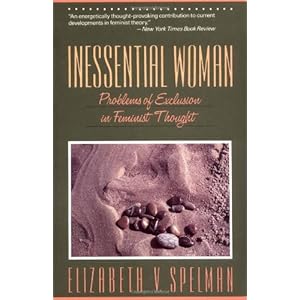
Last week I was re-reading Inessential Woman: Problems of Exclusion in Feminist Thought by Elizabeth Spelman It examines the white middle class bias in (north american/euro) feminist theory and spends quite a bit of time discussing why The Second Sex is biased even though de Beauvoir had a race and class analysis. It's a great book, the first two chapters are pretty history-of-western-philosophy heavy but you can skip around if that's not interesting to you. It came out in the late 80's and was really groundbreaking in arguing that all feminist theory needs to have an inter-sectional lens at its core, meaning that there is no gender without race or no race without class, no sexual identity without ethnicity etc etc. As a result, feminism that tries to isolate gender and universalize along those lines is not really useful because no woman exists outside of society...so when women are talked about in general terms, "white women" are being referred to--following this line of thinking-- "middle class" women and "straight women" and "abled bodied women" become the norm and everyone else is an exception to the norm, "the other" (which, paradoxically, is what The Second Sex is trying to say about women in relation to men). Spelman traces the tendency to falsely represent reality in this way back to the beginning of western philosophy and her analysis of The Second Sex explains why de Beauvoir, who was one of the most highly esteemed thinkers in the world at the time, was not able to wholly escape the philosophical tradition she was trying to question.
I was also reading feminist theory essays in a few different anthologies and came across Cherie Moraga's classic piece From a Long Line of Vendidas: Chicanas and Feminism,...it deals with a lot of issues of race/gender/sexuality and class...it takes the authors' specific experience of growing up queer and Chicana and situates it within a larger historical/social framework --she then uses that understanding to critique white, middle class hetero feminist theory of the time period--as well as the white, middle class lesbian culture/radical feminism of that era, arguing that bias and assumptions need to be examined in order for the movement to be inclusive. C. Moraga is pretty famous for being one of the women of color/queer feminists whose writing actually changed things in the early 80's. She co-edited This Bridge Called My Back: Writings By Radical Women of Color with Gloria Anzaldua. Her writing is complex, the opposite of dry, poetic, personalized...vivid. She uses her skills to take apart the world and present a fresh, inspired vision. It's cool reading it now, knowing how much of an impact her words had on feminism.
Other than this I've been reading a lot of gluten-free cookbooks and stuff about mortgages and the housing crisis. Maybe I'll post about that later, but maybe it's sort of boring...well it bores me since I don't know how to bake and try not to worry about money/the future. One thing that did occur to me in my research is that I don't understand why the "for dummies" books are so popular. Using the "for dummies" approach makes sense--breaking down a subject matter into an easily understandable, digestible format--but the writing style in all the books is pretty terrible...lots of stupid humor and a weak author personality, that is supposed to make it more conversational and "fun" or less intimidating? I've always liked the "An Introduction To" series or "For Beginners" or anything with comics/illustrations...but "for dummies" kind of gets on my nerves, although I do find them useful. I wish everything was just a comic book instead of a "for dummies" book.
Maybe I'll have more to say about Keef later, but Liz Phair did a pretty good job, though she fails to examine his sexism at all. He calls women "bitches" or "baby" or "dear" or "honey" in every other sentence. If you heard his recent appearance on NPR's Fresh Air, then you probably noticed he had some cringe-inducing moments with Terry Gross. It's like he's your weird uncle or grandad and you don't want him to embarrass you, but then he keeps doing it and your like, oh I get it, he really IS a big sexist asshole...duh! But then he gets around to talking about guitar playing and it's so awesome...way better than "guitar playing for dummies"!!!
I read it straight through when it came in the mail without stopping. It took about six hours. I thought "oh I'll write a review, but I have plenty of time, it's not coming out for a few months". Then I got an email from Johanna Fatemen where she mentioned she was reviewing it for Book Forum, so I decided to wait. I'm glad I did. Jo is a really, really, really good writer. She's one of the smartest and more captivating writers-who-wrote-zines-in-the-90's for sure--definitely in my top five favorites of that era of feminist fanzine writers. If you ever get a chance to read her zines you totally should do that: Snarla, Artaud-Mania or My Need To Speak on the Subject of Jackson Pollock are the ones I remember, but she may have written more. I'm imagining you finding her work in a zine library or in a musty archive or perhaps in PDF format or maybe will get a shitty xerox sold on eBay for too much $. Please sit there and read everything she has written, you will be grateful that you did and your life will be altered and enriched and you will want to make art or culture or just plain want to make something happen.
Johanna's review of Sara's book is pretty favorable, but there is a hint of criticism lurking underneath the surface. That is the part I would have liked to have read more of, but I understand she is writing the review for Book Forum. If I was reviewing this book in a pretty mainstream publication with a wide-audience I would give it a good review too. I am giving it a good review now. I liked the book. When I was done reading it I wrote to Sara Marcus and said something like "Dear Sara Marcus, Thank You For Writing This Book. I Can't Imagine How Much Work It Took. Wow! You Really Did It! Congratulations!" and mentioned that there were some things I remembered a little differently…other things I didn't know about….but really the emotion I felt when I was done reading the book was appreciation and relief and while I was reading I was totally consumed by it, not noticing that any time was passing at all. So yeah, I like the book, some things I liked about it more than others. You should read it and make up your own mind though and post your review so that there are multiple feminist voices discussing this representation.
Whenever one of these books comes out, I get a little nervous about how I will be represented. I felt a little odd about that in this book, but I tried not to let my self-image issues get in the way of my perception of the work as a whole. My own relationship to riot grrl is complex. Riot Grrl would not have happened without Bikini Kill for example, but I identified as a riot grrl for only a short time, when it had two "R"'s instead of 3 maybe. Who added the third "R"? This is a real question?! Riot GrrL/GrrrL started in Washington DC in June 1991. But it really started the year before that in Olympia, WA. Girls To The Front explains that history really well I thought. I moved back to Olympia (from DC) at the end of 1992 and the third "R" had been firmly established. It was at this time that I finished writing Jigsaw #5, which documents a pretty hard year, Fall 1991-Fall 1992. By the way if you are 23 years old and you think you should write a fanzine about everything in your brain you might regret it later because it turns out that fanzines are not ephemeral art after all, they actually last forever! I guess if you are that age now (or way younger even) then you have no illusions about anything being temporary because you grew up with the internet and you don't care about privacy. Well, I made 10 copies of Jigsaw #5. Yes, 10 copies. I am serious. It's about 92 pages long. I couldn't afford to print them. I sent them to 10 people. A few years later I printed 25 more copies. At the end of the 20th century I published Jigsaw #7 and printed about 20 more copies of Jigsaw #5 to send to friends and that was it. So even though that fanzine seems like it may have been written for a lot of people to read, I tried to keep it a secret.
There are a lot of reasons for that deliberate decision, but I think the best explanation is that the overnight success of Nirvana changed everything. I had been going to shows in Olympia since 1983, so when Riot Grrl (with one R) was formulating- pre-Nirvana success story-we were still thinking in that 80's mindset. The 90's hadn't happened yet. We were living in an underground culture that was being turned into a commodity and sold back to us, which was really disorienting. It is impossible to explain this, because it was so different, but if you use your imagination maybe you might understand a tiny bit. So when everything changed, it felt natural to take a step back. It was confusing. I was confused. Bikini Kill was confused and suddenly "riot grrRl" had a media created-definition and that was not the sound of the revolution because the media was sexist and all about selling shit and we wanted to destroy society. (Later it became obvious that the media had a positive impact as well as a negative one, but that was not clear at the time.)
Jigsaw #5 basically kind of says "fuck you" and "get away from me" and "we don't need you" and "we go with the kids yeah yeah yeah yeah" over and over and over again, in an attempt to navigate the distance between the 80's underground idea and the early 90's pop culture crap that was for sale at the mall. I was trying to say, "hey let's not all become capitalists, let's try to make something revolutionary happen." But I was also freaking out and fluorescent lights were shining on us and we were naked and lots of flashbulbs were going off and people were being exploited and no one had any money. Ok, well some bands on major labels did, but nobody in a "riot grrrl" band was getting paid, but a lot of money was being made off of our image. It's fine to make shit for free, but to make shit without a profit motive and to see something you helped create being used to make money for corporations without your permission totally sucks. So Jigsaw #5 uses terms like "squares" a lot, to try to set up the idea that if you are against capitalism, you are not interested in "the square world", you want to create an alternative, where making money and being successful in those terms is not the point of art or music or whatever it is you do.
I feel like I need to explain this, because Sara Marcus quotes Jigsaw #5 in her book. In fact, she kind of uses a quote from me in her book in a pivotal way in the story arc. I wrote a long-winded Gertrude Stein-meets-Jack Kerouac inspired rambling girl of an essay that tries to address this 80's underground mindset collision with the still emergent 90's pop culture reality where I say that I do not identify as a riot grrrl anymore and say some kind of insulting sounding stuff about "well intentioned hopelessly enthusiastic isolated young girls who still feel that label is meaningful to them". Looking back on this now, it sounds really harsh! But I am me and I can remember writing it and I know what I meant at the time. I was ready to give it up and start something new! I wanted to move things forward. I thought that it had become meaningless and that we needed to start the next era. It had seemed miraculously easy to make riot grrl happen, so why couldn't we just re-invent punk rock feminism again and again and again? In fact, isn't that what we are still doing over and over and over again even now in the year two thousand and ten?!!! We are still making things happen, creating independent culture, self-representing, making work, participating in community life, sharing ideas, listening to each other, disagreeing, discussing, making mistakes, learning and living our lives with our eyes and ears and mouths and hearts open. Right?
History is tricky. For instance now everyone calls that whole time period of punk feminism "riot grrl" and it has a much broader definition than it did back then. There is a market for "riot grrl" history, so we have to be suspicious of that economic factor but we shouldn't let this stop us from documenting our own scenes. Nostalgia is the enemy. Just look at what happened to the baby boomers. 60's radicalism was actually radical, but you have to unearth that radical history, it will not be handed to you. Read Marissa Magic for more on this theme.
Bringing up the question: Is punk rock feminism dead? No. Is "riot grrrl" dead? Well I will not make that claim now because in retrospect, it was certainly not dead in 1993, it had relevancy to all kinds of girls then, even if I no longer felt it was a useful term, and I think the same is probably true today. In fact I know it is true, because I get letters (ok emails) from girls all over the world all the time who tell me they are riot grrrls and love Bikini Kill and that they believe in "The Revolution, GRRL STYLE NOW!" By the way, I still think that the emphasis needs to be on "now" and "revolution" rather than on "grrl" or "style", but if you disagree, please let me know why! But if you are a Riot Grrl then own it! Don't get all caught up in early 90's retro crap. Start a fucking riot!!!!
Riot Grrl belongs to whoever needs it and believes it has the power to give their lives meaning and change things. That is the reason for all of this. Change the world. Don't accept things "the way they are now". Create your own meanings. Make your own definitions. Use culture as a tool. Just know you will have to be quick and constantly on your toes and maybe it's harder than ever to create something ephemeral, to live in the moment, but maybe it's even more than necessary now. The now of now.
If you are interested in starting a young feminist movement rooted in your generation, my advice to you is not to let anyone stop you. People will laugh at you. Ignore the sound of their voices and listen to your own. Scream if you have to, even if you think that no one can hear you. If you are actually threatening the status quo you will not have the approval of the status quo. Call it whatever you want, the point is to fuck shit up. This is true for feminists of all ages and eras by the way.
And never forget what Ari Up taught us: silence is a rhythm too.
How do women perpetuate sexism? Are there ways in which some of us benefit from patriarchy? I know some people are still fond of that old riot grrl saying, "there's no such thing as reverse sexism". I understand this as a strategic position aimed at redirecting the discussion to a more constructive (in theory) examination of power; the imbalance is societal and there is a difference between discrimination and institutionalized oppression. But is it really true that women can't be sexist? If we really want to dismantle oppression, don't we need to take responsibility for how we, as women, also participate in this crap? For example, how do straight women put pressure on men to live up to a patriarchal ideal of masculinity? That is something I have witnessed my whole life and I think it's really damaging to men and women.
But these are hard conversations to have with men who have power over you on some level. It's often too exhausting and unproductive to sustain this kind of dialogue. Plus it might require giving up something that makes you feel powerful or even gives you real power, especially economic power. For example, if a man is "the breadwinner" in the family, the bills are more likely to get paid. If a woman tries to be the breadwinner, on average, she will make less money than a man. Statistically, if she has children she will make even less money. For reasons like this, some women tend to be more open to talking about "internalized sexism" or sexism between women. For some of us it's easier to confront. For many of us it's less risky in really concrete, material ways. This is not to say that this lets us off the hook.
I still think both of these things ("there's no such thing as reverse sexism"/ saying "internatlized sexism" instead of sexism) at least slightly fall into the "victim feminism" category, meaning this way of thinking assumes we are victims and not responsible for our own actions. I mean, even though ideology exists, power exists, institutionalized oppression exists--we do have free will, we do have agency--at least to some extent. I'd like to believe that anyway. So if we are going to be feminists and hold others accountable, we also need to be accountable for how we choose to live our lives.
Thinking about how women are sexist towards each other, I picked up a book at the library called Woman's Inhumanity to Woman by Phyllis Chesler. Woah. It certainly made me think re-evaluate some of my own behaviors. For example, why is it sometimes easier to deal with guys "being jerks" than it is to deal with women who are being mean, controlling or dramatic? I think I tend expect less from men, so really I don't let it bother me so much when they fuck up. But by being harder on women than I am on men, I may also be perpetuating sexism towards women. I know this is something that people talk about a lot, but to see it in your own relationships with people is intense.
The book itself is not great. It suffers from that kind of second-wave feminist tendency towards universalizing. It draws examples of "woman's inhumanity to woman" across cultures without situating them adequately. Additionally, the book seems to be driven by personal vendetta. Chesler is angry about several incidents that happened to her in the woman's movement and by writing this book she seems to be trying to call people out on their shit without naming names. I realize the personal IS political, but at times it feels like reading someone's chap book from middle school where they write what they really think about you--the ostensible logic being that only you will know they are talking about you--the reality being EVERYONE you both know will know EXACTLY who the shit talk is directed towards. Ironically, as a result, the book itself feels like a catty act of revenge. Sure maybe there are some legitimate grievances here. But if you are gonna call someone out, call them out! What good is served by talking around the issue? For me it got confusing and tedious and I didn't finish reading it. This is not to say that feminists shouldn't talk about this stuff, but if we are going to talk about it, let's talk about it clearly and directly so that it makes sense and is constructive. I realize this is hard to do and I think this attempt is better than nothing.
Around the time I picked it up I ran across a "not-your-ordinary chick-lit" novel by Lucinda Rosenfeld called I'm So Happy For You. It might not be typical of the genre, but compared to the male-dominated George Pelacanos novels I've been reading lately, it is pretty female-centered. Unfortunately it's also pretty mediocre and there are some really...dare I say "sexist" undercurrents? The plot revolves around two best friends from college who are at different points in their lives and become "frenemies". Everything is fine, from the protagonist's point of view, until her friend starts getting her shit together and living her own life. As soon as the friend is no longer a complete fuck up, things gets weird in their relationship. So while this is an interesting theme to explore--how friendships between women can get competitive and bad when one is perceived as having more power than the other--the book was pretty depressing and ultimately disappointing. Although the book seems to be about cattiness it also uses cattiness for entertainment value and does not explore what it means that women are catty to each other--it just shows us how awful it can be and kind of normalizes it.
On one level, I enjoyed reading it. I think I read it in one evening from start to finish. It is a page turner. But there was this annoying hipster-turned-yuppy who lives in Brooklyn type "identity" or maybe "niche market" that was trying to be sold to me that was ultimately conservative. The main character works for an ineffective leftist magazine but spends her days reading entertainment news on the web. While this was funny at times and maybe also realistic, it seemed to endorse a kind of post-everything why-bother version of reality. There is an acknowledgment that we are at war with Iraq, but the characters feels disconnected from world events. Is the reader supposed to then feel absolved from her own complacency? Why even mention politics if you aren't going to say something interesting? It's more than a little annoying. It reminded me of that terrible film Away We Go and I kept hoping no one makes a film of the book. Maybe it was meant to convey "realism"? Not sure.
I'm also not sure if the book has anything revealing to say about female friendships. It depicts them realistically on some level--you will recognize the cattiness and weird games straight women often play with each other--but it also makes this kind of thing feel somewhat inevitable. I guess the author is absolved because she has a "touching" ending where a mother and daughter who didn't like each other discover a deeper connection? I don't know. Anyhow don't be surprised by this book being kind of crappy if you do decide to read it. It's the kind of thing that would be good to read on the plane. I really felt the author dumbed down her characters because she wants to market the book to Hollywood or something. I mean really, they come across as cliches, and the story centers around the demographic that has the most money to spend on stuff like books and DVDs. So maybe that's cynical of me but I felt there was a market driven motive for the book that was noticeable and distracting. Is cattiness marketable? Yes. Sexism sells.
So how would someone write about this stuff without perpetuating it?
Awhile back I did some research on the 70's "woman's novel", a genre I vaguely remember from high school. This was possibly my first introduction to feminism. I tried re-reading The Golden Notebook by Doris Lessing and Woman On The Edge of Time by Marge Piercy and didn't get very far, though I still really liked The Golden Notebook. I had better luck with The Woman's Room by Marilyn French, which I had never read before. I liked it but it was limited in scope. This is something I will continue to explore....maybe someone can recommend a book similar to Shelf Discovery about 70s/80s feminist novels? I know there's a lot of Sci Fi, which I'd love to read about more than re-read...
Here is something a former colleague of mine forwarded me when we were discussing this stuff via email. It's called "Trashing: The Dark Side of Sisterhood". It probably deserves it's own post. It was written by Joreen for Ms. Magazine in 1976.