Sunday, January 31, 2010

The Last Secret by Mary McGarry Morris


The Last Secret is a thriller that is supposedly well-written. It got good reviews and the author is critically acclaimed. The story centers on Nora, who works at a newspaper and has a couple of kids and a successful husband. From the fact that she has a career and a family (I guess) the reader is supposed to think her life is perfect (according to the reviews) but from the very beginning of the book, her life and sanity is shattering into shards.

I found the structure of the book to be confusing and the writing a little distracting and hard to follow. It starts off describing a violent, sexually charged week of her life as a rebellious teen and quickly moves forward to the present day. Nora is middle-aged, her marriage is crumbling and her kids are suffering. Her husband has been having a relationship with his best friend's wife, who happens to be her best friend and his ex-high school sweetheart. The story then unfolds mainly from Nora's point of view, which is highly fragmented, panicky and full of self-loathing. The other perspective is that of a sociopath from her past who has resurfaced named Ed. His misogyny mingles with her self-hate and vulnerability to paint a disturbing picture of victimization that is pretty convincing.

I kept wondering if people are really this surprised when their middle class, suburban life--career, marriage, nice house, two kid--fails to sustain them. I find that hard to relate to but I suppose I shouldn't. The book does a good job of contrasting appearances with psychological pain lurking underneath the surface. As far-fetched as the plot would seem if I were to write it down on paper, The Last Secret is believable up to a point, which makes me wonder why, and have some degree of respect for the storytelling. By the end of the book, things are both totally unbelievable and simultaneously predictable. Plot twists reveal "surprises" that are easy to see ahead of time and things become more like a daytime soap opera. The "last secret" is apparent early on, making its revelation anti-climatic. Everything else that happens after that point seems sensational and hard to take.

In the sense is that it's a dystopian novel, it kind of works, but also feels cheap and emotionally manipulative, like a Hollywood movie. Thematically it reminds me of The Corrections by Jonathan Franzen, which offers a dark, depressing take on the American middle class, but gives the reader no hope or reason to care about what happens to his characters. The Last Secret feels empty in a similar way. The characters don't seem to have any depth to them. At best it's a modern day Gothic American tale, grotesque and strange yet familiar and mundane. The incestuous small-town feel the book conveys is realistic--lives are too intertwined and there is no way to be sure of who knows what or where anyone's loyalties lie. At worst its a melodramatic, goofy murder story about wife-swapping and keeping up appearances that drowns itself in a swirl of shame and loathing. There's also a quasi-religious side-plot that is a little heavy-handed. The theme of "respectability" didn't really engage me. The theme of self-deception was far more intriguing.

I didn't like it very much, though I was compelled to finish it because I wanted to know how things were going to turn out. By the end I was pretty disappointed and happy to be done and move on to the next library book. I also think it could have been about 50 pages shorter. I probably won't read any more of her books.

One-Dimensional Woman


One-Dimensional Woman, by Nina Power- a philosophy professor and blogger- is an incisive work of feminist cultural critique. Power’s book makes important connections between mainstream trends in feminism and contemporary capitalism and raises important questions. It also reminds me of The Baffler with its compelling use of academic theory for compact, lucid, trenchant and hilarious screeds against mass culture, ideology and contemporary capitalism.

An example of these elements can be seen in the way Power frames the underlying issues of the book:

“Did the desires of 20th century woman’s liberation achieve their fullfilment in the shopper’s paradise of ‘naughty’ self-pampering, playboy bunny pendant and bikini waxes? That the height of supposed female emancipation coincides so perfectly with consumerism is a miserable index of a politically desolate time. Much contemporary feminism, however, particularly in its American formulation, doesn’t seem too concerned about this coincidence and this short book is partly an attack on the apparent abdication of any systematic political thought on the part of today’s positive, up-beat feminists. It suggests alternative ways of thinking about transformations in work, sexuality and culture that, while seemingly far-fetched in the current ideological climate, may provide more serious material for a feminism of the future.”


Power moves to examine these issues from the perspective of two stated contentions: (1) “I contend that much of the rhetoric of both consumerism and contemporary feminism is a barrier to any genuine thinking of work, sex and politics…what looks like emancipation is nothing but a tightening of the shackles” (2) One-Dimensional Woman starts from the premise that we cannot understand anything about what contemporary feminism might be if we neglect to pay attention to specific changes in work and the way in which ‘feminism’ as a term has come to be used by those who would traditionally have been regarded as the enemies of feminism.” Both reflect the underlying viewpoint and methodology Power utilizes through out her work; post-humanist Marxism. (what I mean by this will become clear below)

The first few sections provide evidence of Power’s first contention. Her chapters on Sarah Palin and the Hawkish and Mawkish use of feminism to condone the invasions of Afghanistan and Iraq, show how this appropriation of feminism unites the “imperialist language of liberation with the techniques of war.

Her later chapters on labour puts forward a compelling counter-argument: rather then work liberating women, neo-liberal labour has turned the male and female workforce into behaving according to traditionally feminine character traits by annihilating the division between work and free time and forcing you to function in your every waking hour like a pliant, flexible, constantly networking constantly advertising, perky resume for your occupation.

Power further argues that this type of work has extensive consequences for how women relate to their body as well as feminist critiques based on the idea of objectification. Since, Power argues, your body has become has become a cv, “Girls Gone Wild” is paradigmatic of neo-liberal labour which has pernicious and insidious consequences for subjectivity. In work, then, you;


“give up something obviously crap in exchange for a kind of performance that reveals that there is nothing subjective, nothing left, hidden behind the appearance, that you simply are commensurate with your comportment in the world. You are your breasts.”


Consequently, Power argues that many contemporary women always already objectify parts of their body, viewing them as wholly separate entities. This causes here to raise the question “whether the language of objectification is still useful because it depends on a minimal subjective dimension which may no longer exist in the modern world with no separation between the private world and the job” So, that “if feminism is to have a future, it has to recognize the new ways in which life and existence are colonized by new forms of domination that go far beyond objectification as it used to be understood.” (here is the post-humanism, questioning whether a substance known as human nature exists below this colonization)

Power offers some of her own suggestions for the future of feminism through film. She proposes identifying candidates by offering the following grounds: does it have at least 2 women in it? who at some point talk to each other ? about something besides a man, marriage or babies? Which leads her to compare Sex and the City, which she characterizes as a sort of consumerist quasi-religious film about searching for “The One”, with Daises, which is of course amazing. She also advocates revisiting the potential of early pornography with its liberatory notions of bodies, sexuality and possibility as a contrast with the modern porn industry and the sexuality of hyper-capitalism.

She concludes, by restating the importance of feminism has for showing the connection between household labour, reproductive labour and paid labour and argues that contemporary feminism should re-invision how the three relate along the lines of Firestone’s The Dialectic of Sex.

In all, I found One-Dimensional Woman to be entertaining, provocative and illuminating. While it is true that the critique’s Power offers are far more fully fledged then her proposals (although to be fair this is a defect of the school of philosophy she is working in) and her targets only focus on what are perhaps the most egregious easy targets, I still find myself in full agreement with her contentions and premises and intrigued by her proposals. As Power uses a wealth of other scholarship, One-Dimension Woman is also a good resource for further reading.

Saturday, January 30, 2010

Just Kids by Patti Smith


Like Bob Dylan's Chronicles Volume One, this is a remarkable book for us longtime fans and I hope it is merely the first volume in a longer series of memoirs. Patti Smith the poet, rock-n-roll star, mother, artist, icon, rebel, myth maker and performer gives us her own coming-of-age story the way only she could have told it. Wow. To sum up what she says would be to deny you the pleasure of how she says it. This is her first prose book and mostly covers the period in her life from 1967-1973, when she was photographer Robert Mapplethorpe's best friend, lover, muse, co-conspirator and partner-in-crime. It's a love story that celebrates the miracle of finding each other at the exact right moment in time and making the most of it, living as fully as is possible on very little means but a lot of determination and sheer will, which takes the form of desire as well as desperate need.

I particularly enjoyed reading the cultural history--they lived on the streets of New York City in the summer of love, ended up in the Chelsea Hotel with leftover from the 50's beat poets and Woodstock era rock-n-rollers, hung out at Max's Kansas City on the fringe of Warhol's fading Factory scene, knew theater people from Penny Arcade to Sam Shepard--their work led them to the high society art-industry and the underworld of CBGB's respectively. This is all well-documented and /or made mythic here, depending on your interpretation of the book. You can expect cameos by Jim Carroll, Richard Hell, Tom Verlaine, William S. Burroughs, Allen Ginsberg, Harry Smith, Jimi Hendrix(!), Grace Slick, Bobby Neuwirth & Janis Joplin to name but a few…

Another thing I liked about the book is how it covers the economic reality of being an artist and having no money. It describes the daily situation of what that was like in this time/place in lucid detail: the hunger pains, the shoplifting, the shitty jobs, unemployment, the shared sodas and hot dogs, bad diner coffee and late night donut shops, the alleyways, fire escapes and park benches--you will recognize the daily hustle of the punk--the artist as scavenger...as gleaner...as thief.

But the most fascinating part of Just Kids is Patti Smith's riveting re-assemblage of their personalized iconography and shared aesthetic universe. From Blonde on Blonde and the French symbolist poets in Patti's case and Midnight Cowboy to Michelangelo in Robert's--this is a meticulous inventory of their inspirations, visual & literary obsessions, hang up's, hang out's, freak-outs, textures, trinkets, wall-hangings, record & book collections, loft-apartment dwellings, (separate) pilgrimages to Paris/San Francisco --providing the reader with a fleshed-out, clear aesthetic lineage of their lives as insurrectionary artists who were gripped by influences both "high" and "low" and were able to fuck shit up, in the best sense of what that can mean. From how they moved and talked to what they wore and how they held themselves on the street, the way they lived their lives and what was important to them carried itself into their work, which in turn, ricocheted in the culture, changing the world we live in. Study this as a road map of two people who took the raw material of their lives seriously enough to live as if what they did mattered--it is the story of two artists who made work that mattered. Their art is the record of this commitment, to themselves, to each other and ultimately, to the world.

Oh yeah, I guess it's not too much of a spoiler to tell you that this is also a truly sad book, as Robert Mapplethorpe died of AIDS in the late 80's, but in my view this gives the book urgency despite the life-crushing sadness that it must have brought to those who knew and loved him. To live anything less than a full life in the face of such as tragic loss…well that is the struggle we all must contend with in this world on a daily basis…that is mortality, the conditions under which we all live. (for some, like Patti Smith, this is a religious matter, but for me it is merely existential...) At any rate I find Just Kids life-affirming despite its documentation of deep, dark despair.

This is a truly awesome work. It will give you the ammunition you need to fend off the square "hipsters" in our midst. I hope young people take it to heart and I know those of us who have been around the block will be sustained by this for years. Use it as rocket fuel...space is the place…the transformation of waste...it's right here, man. Let it surround you and become your daily imperative to create. In the immortal words of punk rock patti smith "I step up to the microphone and I have no fear".

Thursday, January 28, 2010

Intersex (for lack of a better word) by Thea Hillman


please read this first:
http://www.isna.org/faq/what_is_intersex

This is one of the most honest memoirs I have ever read. Hillman writes with natural courage about her experience and her criticism. She is queer, Jewish, feminist, and intersex, for lack of a better world. She lives in SF and recounts her formative life in this past decade. I started reading this book right after i got my heart broken twice.. and was not getting any action. i only mention this because there is a lot of action in this book. Thea likes sex, and sex parties and fucking. So at first i was a little put off and feeling left out, like why do i live in oly instead of sf... but i'm over that now.

I wonder how i would move if my gender didn't fit into binary gender. What would it be like to live in a world that is marked w/doors (physical and other wise) male/female, and not fit what is assumed as being male or female. Reading Hillman's memoir made me reconsider my own thoughts on gender and the presumptions i make about others' sex.

http://www.isna.org/

Sunday, January 24, 2010

Edith Wharton

I got this Edith Wharton anthology for Christmas. I am reading it this morning but who knows how far I will get. I don't think I've read her before, but I'm not sure. I feel like I read Age of Innocence, but I may have just seen the movie. It's good by the way.

Wish me luck! So far it reminds me of George Eliot.

Saturday, January 23, 2010

Trouble by Kate Christensen


Earlier in the week I read Trouble by Kate Christensen. I actually think this was a little better than Commencement, though similarly cringe-inducing at times but you can't tell it has any redeeming qualities by reading the promo blurb, which sums up the action as follows:

A vibrant story of female friendship and midlife sexual awakening from the acclaimed author of The Great Man

Josie is a Manhattan psychotherapist living a comfortable life with her husband and daughter—until, while suddenly flirting with a man at a party, she is struck with the sudden realization that she must leave her passionless marriage. A thrillingly sordid encounter with a stranger she meets at a bar immediately follows. At the same time, her college friend Raquel, a Los Angeles rock star, is being pilloried in the press for sleeping with a much younger man who happens to have a pregnant girlfriend. This proves to be red meat to the gossip hounds of the Internet. The two friends escape to Mexico City for a Christmas holiday of retreat and rediscovery of their essential selves. Sex has gotten these two bright, complicated women into interesting trouble, and the story of their struggles to get out of that trouble is totally gripping at every turn.

A tragicomedy of marriage and friendship, Trouble is a funny, piercing, and moving examination of the battle between the need for connection and the quest for freedom that every modern woman must fight.


I enjoyed the beginning of the book, where the therapist knows she is going to leave her stagnant marriage (and child) behind after flirting with a despicable man who she knows sucks and does not actually hook up with him. I could relate to it I guess. The books is mid-life crisis-y in theme and about three female college friends who met at Reed College (sound familiar) and are at very different points in their lives, struggling with female friendship, society's prescribed roles for women and their own desires.

Spoiler Alert:

What ends up happening is kind of bogus. When Josie decides to meet her rock star friend Angeles in Mexico City to get away from it all, she is punished for enjoying herself within the narrative. At the exact moment she gets to have awesome sex for the first time in years, her best friend (who has relapsed into heroin addiction after being much maligned as an unattractive, over the hill has-been by the tabloids) decides to take her own life. Message: older women in the music industry will not be able to survive and older women who leave their husband and kid for sex are just being selfish and deserve to suffer. I guess this could be read as an accurate portrayal of women's lives under patriarchy but it comes across as melodramatic and contrived. Does someone have to die for a woman to have an orgasm? I hope not! At this point the book becomes a total let-down, if the "glamorous" idea of first-worlders vacationing in Mexico didn't turn you off already, not to mention some of the self-aware "essentializing" of the locals. This was presented as commentary on neo-colonialism, but I would argue, also worked to reinforce it...same goes with all of Josie's white-guilt and internal dialogue/conflicts about stereotyping people she meets.

I actually kind of couldn't believe how cliché the climax and resolution was. It's like, how do people get away with this stuff? This one also made me wonder what I am looking for by reading this kind of "chick-lit" where the characters are dumbed-down and vacant and the authors have little if anything to reveal about the world, despite their efforts to try and describe it. The main thing that bugs me about both Commencement and Trouble is that they are somehow, by default, seen as representing the modern woman or something. The assumption being that we can all relate to the lives and struggles of the characters.

Moving right along, I finished the last Sandra Scoppettone novel in her Lauren Laurano series this afternoon and have been thinking of comparing it to George Pelecanaos' Derek Strange series. Both are five books set in a location, based around a detective. So we'll see how that goes...in the meantime there are a few more books I recently read so I'll try and get to those first.

Friday, January 22, 2010

Commencement by J. Courtney Sullivan


I read Commencement by J. Courtney Sullivan this week. I must have put it on hold over the summer after reading a review, not sure.

On one level this book grossed me out. By focusing on four women who meet at Smith College, an elite all-girls school, it presents an upper middle class/rich, white American version of young womanhood as "reality"...I guess that is "reality" for some of us...but what passes for sisterhood in Commencement isn't Feminism with a capital "F", despite Sullivan's lack of consideration of how the rest of us live.

The author also sort of perpetuates sexism in hard to pin down, insidious ways. To get specific with one example, she has her characters talking about the other characters bodies (students gaining weight at an all girls school and wearing PJ's and sweat pants to class because there aren't any guys around) in ways that normalize body image issues and reduce women to their appearance. This is catty and also hetero-normative by assuming that women only "let ourselves go" when men are absent. Ok maybe she is just being descriptive here, but there doesn't seem to be an awareness of the issues. It made me feel neurotic that I was supposed to identify with the young characters hating other women's bodies or something. She didn't make it clear that this was the point of view of the characters. It came across as the point of view of the author. There is little if any consideration of how this rejection of patriarchal norms might be positive or liberating, it's just made fun of and dismissed. It seems like this is Sullvan's ill attempt at humor, the assumption being that the reader is well-versed in the kind of self-depreciating humor that so often thinly disguises female self-hate in the public sphere. (An interview with the author seems to confirm this, as she jokes with a reporter about how she didn't wear make up or concern herself with her appearance while at Smith.)

The basic premise of the book is classist. The generation of young women the characters belong to is described as being the first where women had access to (perhaps too many) choices. Well I hate to bring this up, because it's outside the scope of this fictional reality, but it is only a very, very small portion of the world who have these choices, and within that group there is racial diversity/hierarchies and all kinds of economic factors that complicate the choices of "career" vs. "family" or whatever. Secondly, individual choice is a Western value and not necessarily a sign of progress or an indication of a more advanced society. There are multiple feminisms, but the only kind depicted within Commencement is white, middle class and Western.

To her credit, Sullivan tries to talk about issues that impact poor women, such as sex trafficking, prostitution and urban poverty. Unfortunately she does this without allowing any of these women to have much of a voice within the narrative. No women of color in the story become real characters in the book. Out of the two I can think of who are given names, one is a victimized prostitute and another is a girlfriend whose voice we never get to hear--both are objects rather than subjects.

The interesting part of the plot focuses on April, an activist who is under the spell of a renegade star feminist who exploits her in an unsuccessful attempt to "save" trafficked women. Predictably, this becomes just another rescue narrative of a white woman trying to save the world. It's too bad Sullivan didn't use this storyline to give some of the "rescued women" center stage. Instead we get to see a victimized woman betrayed by a radical feminist with good intentions. Because the radical plan backfires, radicalism fails, while mainstream feminism (one of the main characters works for NOW) rises to ascendancy with the book's sudden, unremarkable yet awkwardly unresolved ending.

Less interesting story-lines focus on one woman's struggle with her own emergent lesbianism/bisexuality (Bree), another's alcoholism and in general flakiness/dissatisfaction (Celia) and a third woman's loss of her mother to cancer and need to find security/family (Sally). If it sounds a little like a soap opera, then you get the picture. Lots of melodrama and sentimentality.

I did like reading about four women who become close while they are away at school and struggle to prioritize their friendship after college. I guess I felt a little jealous of this supposed "universal" reality, as not only was I never sent away to a prestigious school at 18, but I was told I had to live at home if I wanted to go to school or else figure out a way to live off campus and pay my own rent. I know I was lucky that my parents were willing and able to pay my tuition but this situation meant I ended up quitting school until I could afford to pay for it myself, working my way through college as an adult by taking night classes over the years. So I guess on some level I wish I got to experience the going-away-to-school and living-in-a-dorm thing, but not really...because going on tour and playing in bands sounds a lot funner, not to mention realistic. Plus going to night school with working adults provided me an education I would never have gotten at an Ivy League/ish school. I know that if I wrote a novel it would have a solid class analysis for example and hopefully it would be a little more in touch with the way most people live. Anyhow, this world is just not the world I grew up in. None of my high school friends went away to college, I never hung out in the dorms (except in high school I'd go to parties at Evergreen occasionally) and I have no idea what this world of elite, bizarre ritualistic student life is all about. From what I gathered from reading this, it's a little like Harry Potter, but with a lot of same sex making out and crying.

Mostly this book, like bad TV, is mainstream, boring and cliché. It made me realize I need to try harder to find contemporary authors/books...that I shouldn't rely on the New York Times so much. This post-sex-in-the-city world of the professional woman who is really concerned with the fact that she has rich friends and she herself is not rich (yet) is just materialistic and depressing. I realize some women live in this world, but that doesn't mean this is "the real world". It's a very limited, privileged view and these depictions are subsequently damaging. They further mystify and universalize. They perpetuate values that make things worse. But worst of all they have nothing to say.

Besides all of that Commencement is just kind of goofy and not very well-constructed. The story starts with a wedding and the climax is a woman giving birth. Ok, get married, have a baby, even write about pregnancy/ having a baby. That is universal enough I guess given that most women have children and all of our mothers gave birth to us at some point, but really as a metaphor or point of drama, it's kind of obvious and corny.

Confession: I did stay up until 4AM reading this so I guess it's entertaining or maybe I just have a problem and get some kind of weird indulgent pleasure reading badly written "feminist" fiction.

Sunday, January 10, 2010

'54 and Manituana


The Wu Ming collective have to be an anomaly in the world of popular fiction. They're a 5-man Italian anarchist collective that writes historically situated epic novels that are stylistic, experimental, engrossing, hilarious, politically relevant and are also bestsellers in Italy. Two of them--’54 and Manituana-- are currently available in English. They are both well worth reading.


Imagine your favourites of the following Hollywood genres; noir, spy thriller, mob and heist film. Now imagine this film is set in several different places in the world with a large cast of characters. Imagine these locations include communist Yugoslavia, Italy, the neutral city of Trieste, Moscow, the Riviera and Hollywood. Imagine the characters include Tito, Cary Grant, Frances Farmer, Hitchcock, Grace Kelly, the heads of the KGB, MI6, the CIA and cast of fictional characters.


Also imagine the action is set at the start of the cold war. Plot points include MI6 recruiting Cary Grant to win Tito over to the Western side of the cold war, while the KGB tries to kidnap Grant. A young communist sneaking into Yugoslavia to reunite with his long-lost Italian partisan father, who stayed in Yugoslavia following the war to build communism. A mafia hit man who wants to pull one last job before starting a new life. An illicit affair that leads to deplorable action by the local head of the communist party leading to a woman asserting her subjecthood. Lastly, in homage to Hitchcock, imagine the device that propels the climax of the film is a television produced by the Mcguffin company. (Hitchcock called his plot devices Mcguffins)


Now imagine that this film is a book. Only its written like a film. The chapters are short like scenes (usually a few pages) and written in taut sentences. Imagine that these familiar narratives frame political allegories, so that this enthralling script is also about the sad waning of the Italian partisans, Tito’s Yugoslavia and the pernicious affects of McCarthy, the USA and USSR. Add humorous elements like Grant and Tito instantly hitting it off because they have so much in common, Grant reading a James Bond novel and finding it terrible, the hero of the novel being named Robespierre and more.

If you think this sounds fun or interesting or both this book is called ’54.


Now if your into a more somber sorta epic, there is Manituana. It doesn’t have the clever fun of ’54. It’s a different bag. But Christ, it’s good.


This time the setting is the American Revolution. But as far as I know its unlike any other historical novel set during the revolution because it’s the story of the Iroquois nation’s experience on the loosing side of the revolution. Like ’54, then, it’s also an exploration of what could have happened if crucial points in history had turned out differently.


Importantly, the Iroquois are not romanticized, essentialized or put in a vacuum. Manituana is not a paean for the loss of the noble savage. Instead, the books characters are humanized and contextualized. Historical figures such as Joseph Brant/ Thayendanegea and Mary Brant and fictional characters such as Mary’s son and Philip la Croix are depicted as complex people with hybrid cultures caught in the world politics of the American Revolution. That these world politics will be calamitous for the Iroquois and does little to better the lives of the poor settlers, or the poor, wretched inhabitants of London, does much to humanize and question the greatness of the American Revolution in more effective ways then purely historical accounts.


In depicting the birth of American imperialism, genocide and American exceptionalism, the work is still highly relevant. With the image of Manituana—a Mohawk myth of a hybrid utopian world—it also gives us an anti-imperialist ideal to work for.


If you are interested in learning more about Wu Ming or obtaining free pdfs of ’54 go here. If you are interested in learning more about Manituana visit the Manituana website which has an integrated google earth app to show where the novel takes place and a wealth of other material that relates to the novel.

Monday, December 28, 2009

Why We Get Sick: The New Science of Darwinian Medicine


Why We Get Sick: The New Science of Darwinian Medicine
I've been reading this book off and on for the last 6 months or so having it picked up at my school on a whim and then having it be required reading for my current food therapy class. Although I think a lot about health and wellness I have never connected evolutionary analysis to the health crises many face so acutely until reading this book. So many people respond to illness with "how can I not feel this?" not "why is this happening?" thereby not really looking at the root source of the issue and only temporarily quelling the "problem".

A few of the things I pulled from the book which I thought were neat:

"Many primates and other mammals can make their own vitamin C, but we humans cannot. Our ancestral shift to a high-fruit diet, rich in vitamin C, had the incidental consequence about 40 million years ago of allowing the degeneration of the biochemical machinery for making this vitamin. "

"It makes no evolutionary sense, for example, for the human developmental process to cause a large proportion of the population to grow incisors in malfunctional positions and to suffer so many problems with wisdom teeth. If a large proportion of modern children need orthodontia and then later some require expensive and painful surgery on wisdom teeth, it implies that there is something wrong with their environment. One possibility is a deficient demand for jaw exercise … meals would have required far more prolonged and vigorous chewing than is ever demanded of a modern child."

"Sitting for hours on chairs in classrooms is unnatural and nothing of the sort was ever demanded of stone age children. When they were sedentary, they would have been squatting not sitting… and would have been able to shift from squatting to kneeling to walking or running. Might it not be that today’s sufferers from lower back pain owe their distress to the hours of abnormal posture imposed during childhood?"

There are ton more like this and sections I found particularly interesting on morning sickness, allergies, cancer and tons more. It's not the sort of book you sit down and read in one sitting, well not for me anyway, but definitely great to get into in stretches of down time. I've got more like this coming so get psyched!!

Friday, December 11, 2009

Trosper's summer reading roundup

Prologue: I wrote most of this back in August. It’s just a few blurbs on what I read over the summer.

This summer has been a fairly successful season of reading for me. After I finished my school obligations in June I scrambled to quickly engage myself in a reading regiment. The very mention of school here has meaning, as my academic and personal interests collide in books and I was careful to be selective in my choices. Basically, why read something in my free time that I might have to be forced to read otherwise? On the other hand, why not enrich my future academic endeavors by sampling material I might need to be privy to? Then again, why not devour whatever book I lay eyes on, regardless of content, useful or otherwise? This last inquiry hopefully steered the course of the season.

I began reading Silent Spring by Rachel Carson. I had picked up a copy at “Blintzapalooza” earlier in the year and it has been on my mental queue for at least a few years. In a nutshell (and this is mostly what I do here…), it is about how the US Government (and of course its corporate interests and benefactors) tried to “control nature” by wiping out unwanted insect populations with toxic chemicals. Naturally, this did not work in many ways. It was written in the 60’s, after a successful career as a government scientist and well-known coastal/marine life guide book author. Read this if you want to be shocked and appalled by the policies of the US Department of Agriculture (of which I’ve been an employee!) at this time. Also, it’s a good primer on ecological principles containing some really nice prose. In real life, Carson was persecuted by the government and corporations for her writings and then died of cancer, not so ironically. Some say this is one of the most important books ever written by an American.

Next up is Hermann Buhl: Climbing Without Compromise by Reinhold Messner and Horst Hofler. OK, well if you don’t know who Reinhold Messner is, look him up, but he is probably the “greatest” mountaineer of all time (yes, if there is such a ridiculous thing). Anyway, Messner put together this book about his idol Buhl: the toughest, most insane of climbers previous to himself. Well, I was excited to read this even though I find Messner’s writings somewhat dull. I would say that this book is for fans of Messner, Buhl, WW 2-era climbing, and Himalayan expeditions. But, I mean fans, and not casual interest readers. I still haven’t finished this but still want to read the Nanga Parbat treatment. Otherwise this is mostly diary entries directly from Buhl—quite dry and germanic. I must say I was interested in exploring his eccentricism and that didn't come across, so either it was my own confabulation or he is really just a typically boring Teuton. Also, his apathy towards the war (he "fought" on the German side--actually he spent the war skiing) was weird but probably typical of a lot of Alp-dwelling Austrians. But, he was truly obsessed, which is usually the case with athletes who bother to write about their doings. And there are cool pictures (very stylish!).


Along this mountain reading came along Pickets and Deadmen by Bree Loewen. This is the account of a woman climbing ranger on Mt Rainier (during the 2000’s). I can recommend this for anybody interested in climbing Mt Rainier or ranger life. The bullshit she goes through is pretty interesting, which is not surprising considering the ultra-machismo of the climbing world. I can only say that probably some of the people she worked for and with were probably a little annoyed with her take on things. And sometimes she just seemed like a snotty, jaded outdoors person, but none the less her perspective from a female in a male dominated profession and hobby is rare and refreshing (and the book is short and to the point).


Next up is Three Fingers-The Mountain, The Men, and a Lookout by Malcolm S. Bates. I came across this somehow at the library while looking for some other stuff. Since I like lookout-lore I couldn’t resist. It is a kind of goofy written personal memoir and history of a particularly precarious lookout in the north-central Cascades of Washington. This is for Forest Service, Cascade, and lookout history buffs only. The way they managed to construct it is amazing. But this is quite an obscure book indeed.


The book I was looking for when I found the last one is A Wilderness Original: The Life of Bob Marshall by James M. Glover. Well, if you are an U.S. environmental history nerd like myself you ought to know who Bob Marshall is. If not, look him up. He is most famous for his hiking ability (30+ miles a day in tennis shoes) and for being probably one of the most successful advocates for the setting aside of public land for wilderness. He was also less famous for being an early civil rights advocate, socialist, and Jewish. He had a PhD in plant pathology, was independently wealthy, obsessed with Alaska, and died at the age of 39 (theoretically from hiking too much…). He is a really interesting character.

Somehow I suckered myself into reading a more academic tome about Marshall and others called Driven Wild by Paul Sutter. The basic idea is that the US wilderness movement was “fueled” by the reaction of some individuals against the increasing motorization of America and the effect it was having on recreation, landscapes, and national character. It’s a great overview of this period between the two world wars by a thesis driven history grad student. It covers Aldo Leopold, Marshall, Benton Mackaye, and Robert Sterling Yard, all founders of the Wilderness Society and all fairly weird (except Leopold, whom was just a regular old genius).

Polar Journeys: The Role of Food and Nutrition in Early Exploration by Robert E. Feeney. OK, well this, by title, may sound boring and academic, and it is too. BUT, it was probably one of the more interesting books I read over the summer. It is chock full of gruesome adventures where the reader can fill in all the blanks left out (after all, it covers well over a century of ill-advised adventures in the Polar regions). The thrust of the book lies in the history of development of nutrition science coincident with exploration. If there were one word to describe it, I would say “Scurvy.” My favorite conclusion from the book was that the English were generally so racist/colonialist that they refused to adopt customary technology from Northern-living peoples and therefore died in their thin, woolen nationalist garments, often groveling over contaminated jars of slime driven oblivious to the vast landscapes of ice surrounding them. The most successful explorers borrowed/stole ideas from Inuits and Scandinavian Laplander cultures in both food and dress. Duh, right?


The Book of Job translated by Stephen Mitchell. It is the Book of Job from the Bible translated by a trusted scholar of comparative religion. It has a lofty introduction that illuminates the text. I guess what makes this interesting is that it isolates the writing from the Bible and so, in a way, stands apart as a work unto itself. If you think about it, the Bible is a loose collection of writings from various authors of antiquity, much of it poetry, and not authored by God (sorry to break it to ya). Anyway, read Job if you feel persecuted. He is this great, rich guy that loses everything and then gets really pissed off at God. His friends tell him to quit whining and face the “reality” of God. He eventually does and God basically gives him everything back. I think the way it ends is a wee bit fairy tale/Hollywood and confusing. But there’s plenty of beautiful blasphemous poetry if you’re into that.

Wildlife Wars: The Life and Times of a Fish and Game Warden by Terry Grosz. I had to mention this one because of it’s ridiculous entertainment value. Terry Grosz, (the game warden, not the NPR host) is this 6’6” 300 pound guy who loves all of God’s little creatures and he beats the crap out of redneck scumbags all over northern California. Some people argue that poaching is done by poor folks who need to eat, but this is a myth, as there is a huge market for illegally hunted game (at least that’s the justification herein, and I agree btw). Some of the stories are outrageous and hard to believe. I would recommend this for people who dislike evil rednecks and animal rights thinkers that want a ripping, adventuresome yarn. It is a wee bit cheesy and if you really don’t like cops, he is one. But you know, he loves the USA, his wife, God, and all the animals. You should admire my courage for admitting that I read this.


The Curtis Creek Manifesto by Sheridan Anderson. I just had to mention this. This was written by this weird cartoonist who was a fishing bum San Francisco counterculture-type. Anyway, he illustrated a couple of obscure rock climbing manuals and was infamous around Yoesemite in the 60’s. Word has it that he introduced Yvon Chouinard and some other famous climbers to the art of fly fishing and the rest is history (Chouinard now sells some of the poshest of fly fishing gear from his Patagonia company). Anyway, Anderson, self-proclaimed "Angler, artist, wander, eternal foe of the work ethic," withered away under alcoholism and general bumness and died truly obscure, but left this brilliant comic book/fishing how-to. It’s one of the best selling fly fishing books of all time.

Last but not least is The Pine Barrens by John McPhee. McPhee is one of my very favorite writers and the first one I recommend to people who may not be interested or know anything about natural history. He really is the quintessential National Geographic-type journalist-writer. I say this because topically he covers just about anything you would read in there, e.g., cultural geography, natural history, political economy and so on. For example, he wrote a book about oranges as well as a hefty tome on American historical geology. This book is what I would describe as a historical geography of the Pine Barrens of New Jersey. It is a discrete natural area that by virtue of its discreteness created a little known American subculture. Minutes away from densely populated metropolitan areas existed this backwoods Appalachian-type world of shacks, bogs, and gun-toting weirdos. McPhee immersed himself in it and brought critical attention to the importance of the preservation of the land and its inhabitants. I would say this is a fine read just like anything else I've read by him.

Honorable mentions:
How the Scots Invented the Modern World: The True Story of How Western Europe's Poorest Nation Created Our World & Everything in It by Arthur Herman.
Forest Primeval by Chris Maser.
Trout by Ray Bergman.
To Know a River by Roderick Haig-Brown.

Epilogue: Winter break is here and I have a decent queue of stuff to read before heading back to the trenches. Wish me luck!

Friday, December 4, 2009

The Way Home by George Pelecanos


George Pelecanos writes stark sentences. I like to read them. I also enjoy the fast-pace of his books, the political themes (race/class/ethnicity in contemporary American society), the fact they take place in Washington DC and his skillful, suspenseful storytelling. He is a good writer and his books are compelling. But his work is deeply flawed and limited by prejudice.

Like many of my favorite writers who utilize this style (Ernest Hemingway, Dashiell Hammet, John Fante) his stories are sexist to the point of distraction. There are few female characters. Predictably, when they do show up, they function as symbols and only exist in relation to men, who dominate the story and propel the action. His depictions of women usually involve describing their body from the point of view of one of the male characters, particularly the ass, and rarely do any female characters appear who are not mothers, whores or wives. Also like Hemingway, Hammet and Fante--his work is about masculinity--but not just any variety. He writes about a particular kind of patriarchal, straight-guy world that only seems to exist in movies and books; a world in which women are cliches and guys are heroic.

I wonder if, like me, he was drawn to his chosen writing style because he hates flowery, descriptive prose--or if he was drawn to it because he hates women (despite his love of the ass). I read 4 or 5 other Pelecanos books before I got to this one, all within a couple months of each other but The Way Home put me over my threshold. I actually don't think this one is more sexist than the others, maybe it's just not as good. Whatever the reason, I was over it. Because really, why be this sexist? Is it ignorance, stubborness, pure-hate, fear? I don't get it. On one level I liked the book, but can I recommend it? No, not truthfully, because while you might think that you can block it out and it's just harmless--it's not cool and we shouldn't have to put up with it. If you think you're up for reading a sexist dude's account of a father-son story that deals with the criminal-justice system, then go for it, but don't say I didn't warn you when you have to tolerate a bunch of ridiculous, annoying, tedious, predictable crap about women. I don't think that his sexism is incidental, I view it as central to his work, and to this writing style in general, unfortunately.

After finishing this one I was unable to get through the last book in the Derek Strange series (though I still plan on it) until I had researched and read some "feminist noir". I hope I can find writing I like as much written by a woman (or even an anti-sexist guy). I like crime fiction as a working class genre. It deals with working people, the underclass, justice/injustice and is largely a critique of society. There's usually a dichotomy between the amoral 'crook' and the pious world of the square. The worker is commonly depicted as a man (or woman) of the law, but often is corrupt or struggling with his/her own moral code and dilemma. Economics is generally a major theme. I've always loved mysteries and suspense, particularly detective novels. I like trying to solve the crime and keeping track of the different plot-lines and possible motives. Usually the characters are sharp and well-formed like they are in a comic strip. Quick-witted dialogue, the shadowy underworld, tragic twists of fate--all good and present here. I enjoy reading Pelecanos for these reasons. He is good at the craft and I appreciate his polemic use of fiction. But by the end of The Way Home, I'd had enough for awhile.

Sunday, November 29, 2009

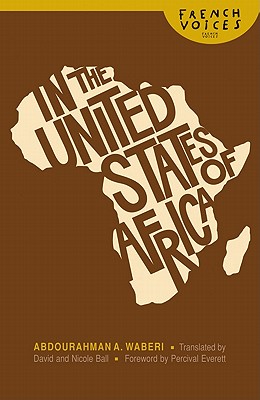
In the United States of Africa


In the United States of Africa
by Abdourahman A. Waberi
translated by David & Nichole Ball

I first read about this book on Laila Lalami's blog that also led me to her full review at The National's website.

I think the only thing I'd like to add to the review linked to above is that this novel is not only worth reading for its complete inversion of eurocentrism but because the author (and translators) have created so many beautiful sentences.

"Wherever they may come from, children do not belong to their progenitors, their parents. They belong to themselves, that's all."

"Every passing day brings its share of dead leaves granted by the wind to hardened city people like you..."

"All the flowers and all the poisons in the world come to meet in the garden of our taciturn heroine."

Women of Color and Feminism by Maythee Rojas

hey bumpidee readers, this book came out this month on Seal Press:

Saturday, November 28, 2009

Odd Girl Out, the Hidden Culture of Aggression in Girls by Rachel Simmons


When Rachel Simmons , a white middle class rhodes scholar, was eight years old she was bullied by another white middle class girl. while attending Vasser majoring in political science and women's studies she kept finding herself distracted by her childhood experience with her bully. So she decided to research girl on girl aggression and came up with next to nothing. Noticing that there where mountains of research on boy aggressions she found herself confused and at more of a loss. So she sent out an email asking women to describe there own experiences and a day later found her email box full from women recounting their personal horror stories. Next she began researching the culture of (white middle class) girl aggression by interviewing girls age 10-14 at different private and public schools.

This book is woven together by Rachel's interviews, one story after the other of girls describing how they are bullied. I found it interesting because i could relate to many of the stories and it made my own current experiences not seem so crazy. I kept thinking about Rachel being in a canoe with a ruler and pencil trying to map out an ocean that has never been charted before. Her in a union suit alone in a human powered water craft with simple means and tools trying to map out a massive and powerful body of water.

I'm glad i read this book, it was a place to turn to when trying to understand and manage dealing with white middle class grown women that have under developed emotional intellect and an inability to be assertive and direct. It gave me clues to how and why most grown white middle class women behave and socialize the way they do and it layed before me many of the problems that we face having relationships with other women. seriously a heavy read.

Friday, November 27, 2009

INAMORATA by Joseph Gangemi


I'm not one to read fiction very often. Especially historical fiction, but this book caught my attention because it is loosely (not so loosely) based on the story of Mina Crandon, one of the many mediums to come from the occult and spiritualism craze of the early 20th century. Since I was way younger I've had an obsession with this period in history because It was America's attempt to socialize death in a way that was seperate from mourning. While I appreciate a modern attempt to re create this most interesting time period through narrative, I did not find the book to be that good. 
Even though I'm not super into it, I decided to write about this book because recent events have caused me to think a lot about death and mourning. I recently was talking to a friend about the emotional processes of grief and how unique it is from every other emotional state. She made an excellent point stating that there's not much room for grief in our culture; traditionally the funeral and memorial services are finished in a day (depending on your religious background obviously)  and then thats the end of the collective grief. In the early twentieth century there was a movement being promoted by entertainers and literary figures (i.e Sir Arthur Conan Doyle, Houdini) to speak to the dead, within the home, in a socialized setting. During this time many mediums surfaced and many were proven wrong. Mina Crandon was one of those psychics. She would claim to talk to her dead brother Walter, who would become violent occasionally. Mina was  a lot more radical than most mediums at this time. She would sometimes perform her seances in the nude and shoot ectoplasm from her vagina. 
 The female lead, on who the book was based on, was done a huge injustice with her role in the novel. She is portrayed as a weak, over-sexual manipulator. She isn't central to the narrative whatsoever; she is mostly just being sexually objectified by the male lead, who narrates the book from a first person perspective. This character is one of the investigators for  the Scientific American which comes to ultimately discredit her. I think it is a TRAVESTY what they have done to her in this book. Even the aesthetics of the cover suggests the kind of  exploitation thats happening, her face unattainable as all these male hands reaching for it, so to speak. During this time there were so many women psychics with the "ability" to speak to the dead (i.e. The fox sisters, Mina Crandon, Leon0ra Piper) that were being investigated by 'science', which at the time was incredibly male dominated. Maybe this was a reflection of what was going on between the sexes politically at this time.... or maybe not. Regardless there was an obvious separation of the sexes within this realm. Even the men that were apart of the movement were ultimately out to exploit this underground sensation. Or maybe Im projecting and rambling.  Regardless, my point is its not very clever for someone to write a FICTIONAL novel about a very interesting time in history and use it to create some sort of jack-offery for male readers is it? Its not worth reading, but Mina Crandon is worth some investigation. 

Sunday, November 22, 2009

And Here's The Kicker by Mike Sacks


In this collection of interviews with 21 top comedy writers - a couple of notable things emerge. Producers of humour it seems are most likely sufferers of OCD and possibly have a science background. As a comedy writer myself, I rejected these sweeping generalisation until I remembered that I tend to do most of my writing sitting on the exact same bench in Highgate Woods and when I was young I did want to be a vet and so did take all the sciences in high school. Add liberal doses of depression and yes, perhaps I am cut out to be a comedy writer after all.
There is a definite tone to this book - and not a lot of laughs. The world of comedy is a frustrating one. Executives rule the roost and executives are all idiots. It didn't matter how many Emmys Arrested Development won, not enough people watched it so it was killed. It's creator Mitch Hurwitz is one of Kicker's interviewees and took this destruction with a shrug. He's a veteran of Golden Girls, Ellen and The John Larroquette Show, so the cruel and unfathomable activities of the network higher-ups must have been painfully familiar by then. The book is full of this kind of pain. Bob Odenkirk's frustration in the SNL writing room, Jack Handey's joy in the SNL writer's room, but frustration at everyone thinking he doesn't really exist, Robert Smigel's ill-advised first sketch on the Dana Carvey Show, which featured Bill Clinton suckling a puppy with his own milk filled teats, Harold Ramis's shame about Caddyshack II. As Steve Martin noted, 'Comedy is Not Pretty'.
Certainly if anyone has an interest in writing comedy, this book is an excellent deterrent. Many of the writers advise trying something else. Annie Hall co-author Marshall Brickman implores prospective writer's to learn CPR and enter health care. Bruce Jay Friedman echoes Grace Paley's advice to 'keep a low overhead'. Wings and Becker scribe Ian Gurvitz describes the process as 'propeller blades that you are about to walk into'. You only do it if you have to do it. If you have some almighty compulsion that forbids you from trying anything else. It helps to be a comedy nerd, ambitious and to have an uncle that works at the William Morris agency. Don't even start if you think you're about to spear a particular cash cow or drown in golden statuettes. It's a book that is both inspiring and disheartening in equal measure. But it's good to hear that even the mighty George Meyer, the man responsible for The Simpsons comic sensibilityand along with Michael O'Donoghue my comedy writing hero, finds writing scripts 'usually traumatic'.
Anyone interested in the creative process, or possesses the misconception that comedy writing must be really fun, will take something away from this illuminating compendium. As The Onion's head writer Todd Hanson notes 'you don't have to be a genius to figure out that humour is connected to pain'. I'll remember that when I'm on my bench, trying to make with the funny.


Saturday, November 21, 2009

Grunge by Michael Lavine


Old School Olympia Skate Rats: (left to right) Randy Rice, Chris Gray, Ted Motz, Eric Greenwalt, Mike Blair, Chris Barwick. This was taken in 1984. The first half of this book is full of beautiful photos of Olympia/Seattle street punx, skaters and mods. The logic being, this is where Grunge came from I guess? More soon!

Codependent No More by Melody Beattie


This is not the kind of book I would normally read. I have an aversion to psychological analysis, maybe especially self-help, because it tends to focus on the individual, or the family, rather than on the larger socioeconomic picture. This book is limited in scope for these reasons but was conditionally recommended to me by a friend as something that might be helpful for dealing with the impact addiction has had on our lives.

In recent years, starting with Jigsaw #7 (1999), I have written a bit about loss, substance abuse and self-destruction. A lot of friends have died too young and many comrades struggle with varying degrees of addiction and related problems. It got to the point in the past few years where I really couldn't be around it anymore and had to make some changes. This was unfortunately inspired by more self-destructive related tragedies happening to people I loved dearly.

While I have never been someone who enjoys hanging out in bars or getting wasted all the time I did get to that point socially where I would find myself in a bar out of pure boredom on a regular basis. Witnessing the damage this routine has inflicted on people I care about and "the scene" in general, I finally stopped going out just for the sake of seeing people. I made some rules at the beginning of the year and stuck to them. For the most part I avoid bars unless there is a reason to go, i.e. a show or the rare DJ night that can't be missed. If I do go out I will have 1 or 2 drinks max, often none. If the reason for being out is social and not related to music, I'll stay for an hour or two, or just leave as soon as I start to feel bored rather than sit there and order another drink or whatever I used to do.

This has been really productive for me personally. I find I am less depressed and have a lot more time to do things I enjoy doing that are meaningful to me, such as writing, playing guitar and reading books. It has made me more isolated, but I have more energy to spend on things that enrich my quality of life like cooking, going to the Y, listening to records, doing yoga and working on research projects. I find that the internet is a good way to stay connected to people, but I do miss hanging out in real time, which is something I'm going to work on for next year. Really this has been pretty easy because being around drunk people and not drinking is not that fun. People start slurring and repeating themselves and they get too close to you and touch you too much and start pointless arguments and they stop listening to each other. There really isn't much of a point.

Unfortunately, the problem of addiction and its impact on people I care about has not gone away and this still effects me as much as I try to ignore it and detach myself from the culture that surrounds it. This book offers 12-step type advice on how to do that more effectively. After reading it for a few short hours, I found it to be very helpful and jotted down some concrete strategies for dealing with codependency caused by addiction. However, the writer IS religious and talks A LOT about the "higher power", well way too much for my own comfort...to me this is a real, big serious bummer and flaw in the book. I understand that this works for many, many people, but I also know that it is not working for me. I have been an atheist for my entire life and while I have learned to be somewhat tolerant of other beliefs, I really can't take this kind of thinking seriously on a personal level. I can't just skip that part! So that is troubling.

I would also like to see a critique of consumerism included in the analysis of addiction. I am somewhat uncomfortable with the individualism and related assumptions in the book as well. Maybe this is me being "codependent" or "in denial" or something, but some of the behaviors that are identified as problematic and unhealthy in the book don't necessarily seem totally negative to me. I understand it is written for someone who needs to establish healthy boundaries in order to take care of their own needs but personally I'd like to see an approach that values nurturing, care-taking and connectedness as well. I am also interested in reading about harm reduction and more radical anti-capitalist strategies for dealing with addiction. My understanding is that the 12-step program claims addiction is a disease based in the family structure. I am not sure I see it this way, though I understand it can be a useful metaphor for some and I want to respect that this approach does work for many people.

Regardless, this book offers practical advice for someone who has been involved with addicts on how to move forward by taking responsibility for your own life and setting boundaries. I would recommend it to someone interested in examining this stuff, specifically how addiction effects your relationships with people on a psychological level and negatively impacts your daily life. But if you are not a "true believer" it can be a little hard to take at times.

Friday, November 13, 2009

Rogues Eccentrics and Villains by Willie Donaldson


The remarkable thing about Willie Donaldson’s “Rogues Eccentrics and Villains – An A-Z of Roguish Britons Through the Ages” is that the thing exists at all. The late Mr Donaldson easily fell into all three of these categories himself – enjoying a feverishly scolded life of debtors, drug abuse and an expensive peccadillo for prostitutes. Before his crack-ridden body was discovered alone in a squalid London flat, allegedly slumped over a pornographic lesbian website – he had squandered at least three fortunes, had been responsible for stage productions involving Beyond the Fringe and Bob Dylan, had affairs with Sarah Miles and Carly Simon (Donaldson is in the running for being the subject of You’re So Vain), become homeless in Ibiza after the disastrous purchase of a glass-bottomed boat and wrote a great deal, like Balzac, out of necessity rather than love.

The book concerning Donaldson’s life has the remarkable title “You Cannot Live as I Have Lived and Not End Up Like This”. It is recommended. Like fellow rogues Jeffrey Bernard, Oliver Reed and Keith Moon, (who all have entries in Rogues Eccentrics and Villains) Donaldson represented the sort of drunken reprobate that is slowly eroding out of British cultural life. Wastrels that were happy to drink their lives away leaving a stream of tattered marriages behind them and yet possessing enough charm to squeeze another drink out of whichever poor unfortunate was within mooching distance at the bar.

Rogues Eccentrics and Villains collects the lives of many of these men and women, from every conceivable age. Murderers, witches gangsters, forgers, village idiots and violent aristocrats are collated and misrepresented by Donaldson, who joyfully assassinates the characters of those he feels deserve it (i.e. the entry for Oliver Reed begins: “bibulous show-off, known as the ‘hell-raiser’s hell-raiser’, a title that is thought to have gone to him because no one else wanted it). Donaldson seems perfectly happy in this company, gangsters in particular are presented with a rosy glow. Tricksters too are described with glee. Donaldson was an arch trickster himself, making his final fortune with the publication of The Henry Root Letters, in which he wrote annoying letters to celebrities and published the pompous results.

Like all writers, Donaldson hated writing and was forced to meet deadlines practically at gunpoint, which makes the creation of this 690 page compendium all the more remarkable. I’m sure many tears were shed and threats levelled before the manuscript was delivered. It was his last great effort. Donaldson’s disgraceful life ground to a halt in 2005. Sadly there are few contenders to take such a mans place.

Thursday, November 12, 2009

Alternatives to Forward Motion--reading Thomas Bernhard


Frost is the second novel I’ve read by Austrian novelist Thomas Bernhard. The first was The Loser, which, written in initially-frustrating-yet-ultimately-captivating long, long clause-ridden sentences, describes the (fictional) relationship between two former music students and their colleague, Glenn Gould. The plot, as it exists, moves ahead by accumulation, rather than discrete action; the magnificent sentences loop forward and back and around again, picking up information in their wake and depositing it on the page. The reader either jumps in, or s/he doesn’t. I mention The Loser first because I was expecting something similar from Frost—written before The Loser, I’d thought I’d find at least nascent evidence of that book’s style. But while one could certainly point out similarities, Frost asks something different of the reader.

The basic premise of Frost is this: a young medical student is sent on an assignment by his supervisor-mentor to go, essentially, spy on the mentor’s aging brother, a former painter who’s taken up residence at a dismal inn in a grim mountain town in the Alps. The student, who narrates the book, is meant to pose as a law student and befriend the painter Strauch, take notes on him, and report back to the brother. We never find out the exact motivation for the mentor giving this assignment—maybe he feels guilty about having fallen out with the brother, maybe he wants to examine his mental decline as a sort of medical case study. It doesn’t really matter. What the book, essentially, ends up being, is at least 50% of the painter’s monologuing about his life and philosophy, which tends toward the idea that we’re all damaged people, living in the thrall of death and decay: “You are standing in a square, and everything is black, suddenly everything inside you and outside you is black, no matter where you look at it from, black and stirred smooth, and you don’t know what stirred it, and everything is broken…” (It is worth noting, too, that the painter expresses some pretty hardcore misogyny—I reconcile it by deciding I don’t need to like the painter as a character, but that might be a bit of a cop-out.) The narrator interjects, every once in awhile, to describe a brief reaction to the painter, to explain a walk the two went on, to paraphrase the painter, or to reveal some details about his own life. (I’ll get to those parts in a minute.)

The painter’s monologues/musings/insights/rants are difficult to get through. They’re repetitive, and grim, and often make very little immediate sense. For awhile, however, they’re oddly compelling, and the student gets caught up in them, too; through his brief interjections, we start to get the idea that some of the painter’s gloomy madness is permeating the student’s own thinking. It was around this point that I started to realize that I wasn’t really trying to comprehend the painter’s words anymore; I was just blazing through them, assuming I knew essentially the points he was making, letting them wash over me, waiting for the next oasis when the student’s voice entered the scene.

At first, I felt guilty about this—I’ve always read way too quickly, often concerned more with getting through a book so I can get to the next one that really taking the time to contemplate and savor. Then, a shift happened in the book. The student was starting to doubt the painter too, to get sick of him, to want to find some way out of his grasp. And I realized that, perhaps, the way that I was reading the book was in fact the way that Bernhard intended. Through the sheer abundance, incoherence, and pessimism of the painter’s speeches, Bernhard has created a text that many readers will find at some level interesting, but also difficult and insufferable, and the reader will push through, plug his/her ears, pick up lucid bits where s/he can, but, overall, just keep going. After all, this is what the student is doing, eventually, too. Not all books are meant to be read in the same way, and the ways in which we read are an essential part of the way we make meaning out of a text. There are different ways of entering the world of a novel, different kinds of readerly intention. Frost illuminates the fact that reading is always an (inter)active process.

I should say, too, that the rarer moments when we get to hear the student’s voice are lucid and beautiful, and not just in contrast to the painter’s chaotic ranting. Here he is on the joy he got out of doing manual labor—

“Down on the building site, I remembered the time I used to go over the big bridges in blue workmen’s clothes. The air was fresh, and the noise wasn’t roused yet. Morning came down off the mountains into people’s houses, where they were saying their goodbyes for the day…The rest of the world that wasn’t working on building sites struck me as crazy, and those people who weren’t standing in holes in the ground I looked at with sympathy.”

—or on the crisis of confidence he begins to suffer, as the painter’s ideas begin to get to him: “My future’s like a stream in the forest, of which there are many precise descriptions, but nothing more.” Or, one of my favorite moments in the book, which sums up the student’s reaction to the painter’s ramblings. Though this is the student speaking about the painter Strauch, it could just as easily be me, as a reader, speaking about Bernhard, in Frost, himself: “His sentences are oar strokes that would propel him forward if it weren’t for the powerful current.” The trick is to realize that unbridled forward motion isn’t the only mode of navigating.