here are my notes on chapter one,a vocabulary for feminist praxis: on war and radical critique by angela davis. i am paraphrasing some of her language here without decoding, please let me know if there are terms that you don't know the definitions of and i can try and help with that, chapter one notes:
how can feminism help us meet the challenge we face in translating widespread dissent against the wars in the middle east into 'a sustained movement that can effectively counter the imperial belligerence of the USA'?
-the school of feminism she belongs to is interested in questioning the 'tools we use' to critique and transform. this tradition comes from social movements against racism, imperialism and supports labor struggles, etc
"it is now important to imagine a world without xenophobia and the fenced borders designed to make us think of people in and from a southern region outside the USA as the enemy. it is now important to imagine a world in which binary conceptions of gender no longer govern modes of segregation and association, and one in which violence is eradicated from state practices as well as from our intimate lives--from heterosexual and same sex relationships" she adds that we must also imagine 'a world without war'.
next claim: idealism is necessary, but not enough.
in her version of feminism:
"Feminist critical habits involve collective intervention as well. The feminist critical impulse, if we take it seriously, involves a dual commitment to use knowledge in a transformative way, and to use knowledge to remake the world so that it is better for its inhabitants--not only for human beings, for all its living inhabitants. This commitment entails an obstinate refusal to attribute a permanency to that which exists in the present, simply because it exists. This commitment simultaneously drives us to examine the conceptual and organizing tools we use, not to take them for granted" (20)
Claim: this version is more radical than the imperialist Laura Bush version.
This more radical feminism is a feminism
-that does not capitulate to possessive individualism
-that does not assume that democracy requires capitalism
-that is bold and willing to take risks
-that fights for women's rights while simultaneously recognizing the pitfalls of the formal 'rights' structure of capitalist democracy
this means we are not fighting for the equal rights for women to fight and die in war or to torture, but that we can advocate for the equal right of men and women to refuse to participate in the military. we can fight to dismantle the military machine as part of our feminism.
next she asks:
what is the relationship between individual and collective accomplishments? she claims it is a mistake to view the career success of someone like C. Rice as a collective success for feminism
at the top of page 22 she talks about emphasizing "feminist methodologies" rather than abstractions. she is talking about 'woman' as an abstraction, referring to the racist, classist feminism of the 20th century that isolated gender from race, class, nation, sexuality--as if that is even possible. she is suggesting that we need to emphasize the practical application as grounded in the material, historicized realities of women's lives as they are lived. no one is female without having a race or class identity, so why theorize as if that is the case? it results in universalizing a privileged experience, as those who are racially privileged do not have to examine 'whiteness' in order to survive, those who are materially privileged to not have to examine'richness' in order to pay rent, etc.
she then encourages us to "inhabit contradictions" and discover "what is productive about those contradictions". i wish she would give an example here of what this would look like. any ideas?
her next assertion is the most compelling to me. in comparing the Vietnam War era to our current era, she uses the My Lai massacre and Haditha as examples, she claims that it is not enough to assume that things would change if we could simply get the truth out to enough people. she recognizes that with embedded journalists, it is true that we are not seeing pictures of the atrocities to the same degree that people were during vietnam, but using the photos of abu ghraib as an example, she argues that it is a mistake to assume our project is to simply get the right information out there to the american public. she ties this mistaken assumption to a critique of the enlightenment. tracing this problem back to philosopher Immanuel Kant, she writes "the problem to which I am referring emanates from the assumption that rational communication and publicity are sufficient".
so, if we agree that it's not enough to get the truth out to the public, because the truth will not have the necessary impact on u.s. foreign policy, then what is to be done?
hmmm. she talks about the reaction people had to images of torture at Abu Ghraib asking 'how could this happen' thinking this is an aberration, rather than being consistent with U.S. foreign and domestic policy. we are asking the wrong questions then?
she then goes back to claim that as feminists, we must be vigilant in our critique of "conceptual tools". i take this to mean she is asking us to engage in a sustained critique of enlightenment thinking (as her earlier mention of 'equal rights' also seems to evoke)....but if people don't know the history of political philosophy or western intellectual history, they don't know what this means exactly--quickly, this is the point in history when Reason replaced God. she is saying that the intellectual tradition that stems from the enlightenment is giving us the wrong conceptual tools, that we can't count on people to be rational and do the right thing once they know 'the truth' about the war in Iraq. Her example of Abu Ghraib then is useful: once people know what happened, they still don't see the big picture. how do we get them to see the big picture? Is that even the goal in her view?
She claims we must make connections between what happened at Abu Ghraib and what happens in US prisons domestically. I would guess the history of US use of torture in Latin America should be examined. we should see this as an example of the continuation of the policy in service of the project of empire. we can't assume the general public to know this history. but if they did, would anything change? according to her critique of Kant, no. so then, what is the point?
her solution seems to be that we need to be vigilant and "engage in constant criticism". but what is the goal of criticism and intellectual vigilance if
the truth and rationalism have no connection to how we act? is that what she is claiming? or is she saying that assuming that being rational=being ant-war is a false assumption? i really am not sure.
i think she is discussing ideology and the role of consciousness in social change without using that language overtly, but i am not sure what her claim is here exactly.
she also asks feminists to constantly critique "democracy", "diversity", individualism and to recognize the role of US ideology in promoting an imperialist agenda that is at odds with radical feminism.
an example of what she means is given when she suggests that violence against women needs to go beyond a discussion of violence between individuals and include state violence, torture, prison violence and capital punishment
she concludes by discussing the case of Assata Shakur, a political prisoner who fled to Cuba and wishes to return to the US and asks feminists to "get involved" and to utilize a feminism that engages in a critique of conceptual tools we use to 'enact transformation'.
Saturday, March 14, 2009

Feminism and War: Confronting U.S. Imperialism: Introduction
Here are my notes so far, if you are reading along, please let me know if there are any confusing terms that need to be defined and i'll see if i can help decode. this is the starting point of the book, as laid out in the introduction:
-the book came out of a Feminism and War conference in Syracuse University in October 2006
-U.S. military budget at the time: 1/2 Trillion $ a year
-U.S. military casualties at the time: 3000+, Iraqi civilian casualties: 60 a day from bombs or gunfire
"The administration of President George W. Bush had explicitly argued that U.S. intervention argued would promote the cause of women's liberation in those countries (Iraq, Afghanistan), thus claiming a 'feminist' motivation for U.S. military aggression."
-what does it mean that women are being used as a justification/motivation for war?
what are the assumptions here? does feminism support women in the military?
the first footnote of the chapter lists several statements, articles, books by feminists exploring thess questions, starting in 2001, including one by RAWA (Revolutionary Association of the Women of Afghanistan)
the conference (and the book) shows that the relationship between feminism and war is "contested and complex". what are "women's interests"? how do we understand and pursue them? "war" must be examined in term of 'world economic globalization', as a tool of imperialism, etc.
-how is feminism used as justification/legitimacy for imperialism and war? also explore constructions of race, gender, sexuality, class etc in this context
"Given the centrality of US imperial wars in the world today, it is impossible to understand 'feminism and war' on a global scale without understanding the specificities of the racist, hetero-sexist, and masculinized practices and ideologies mobilized by a USA in pursuit of economic and political hegemony" (2)
therefore, the imperial wars in the middle-east should be examined in terms of the recent history of US foreign policy/wars since WW2 (Guatemala, Cuba, Vietnam, El Salvador, Sudan to name a few)
This book intends to examine the wars in Iraq and Afghanistan as examples of the US "on rescue missions in the name of democracy and 'civilization'". What does democracy actually mean, given this situation? What is feminism in this setting? What particular forms of racism, colonialism are being enacted here? How are images of sexuality and gender being used to further this agenda? What is the reality of how war is impacting women's lives in these countries? How is the image of the Western female soldier being used to further this agenda? Which females are seen as "helpless" and which as "liberated"? What is the actual reality of what is happening?
Conclusion: feminism needs to have an anti-imperialist, anti-racist lens.
Monday, March 9, 2009
The Sex Revolts by Simon Reynolds and Joy Press
Ok, so I found this book at the library and I was super excited about because it's basically a combination of my two favorite things, punk histories and gender theory, and it's co-written by Simon Reynolds who wrote one of my favorite books Rip it up and Start again so yeah. This book bills itself as gender theory in rock and roll and it's divided into three parts, two about dudes (basically) and one part about ladies. First of all, this book is flamingly hetero-normative which was kind of frustrating. Anyway.
The first part "rebel misogynies" mainly talks about the rebel stereotype, breaking it down into a bunch of sub-rebels I guess. I really liked this part of the book. It covers hyper-masculinity, boastfulness, wanderlust, drugs, warriors, the absence, fear of and marginalisation of women, making connections from beat poets to the rolling stones to 60's garage rock to nick cave. LOTS of talk about oedipal stuff. It was interesting to read about the roles of women in rock through the context of rebel misogyny, as in these are the roles that women play in the music of these dudes.
The second part was more about psychedelic music and "the rebel" tiring of his ways and wanting to return to the womb (serious, SO much of this books ideas are based on oedipal things, however there is absolutely NO reference to the electra complex) At first this part was kind of interesting, but I felt like it quickly devolved into just a really long record review of can and my bloody valentine. It's weird to be reading theory when you can tell which bands the writer is super into and which things they're not. So overall, second part, whatevers.
The third part, which in the intro of the book was basically billed as the female theory part was HORRID. It spends a lot of time talking about female musicians not idolizing females so their music is in turn not female. This theory is stupid. I don't even wanna explain why. It brushes over riot grrrl in a short chapter, basically saying that the content was feminist but the music wasn't female, just a rip off of sixties garage rock, in turn being a ripoff of boy music, so it doesn't really matter. It did have some interesting things to say about the raincoats, and it did give them the crown of "true female music", so that was good, I guess, even though I don't really get or like the idea of "true female music". Basically this part of the book spent a lot of time being like "girls are just ripping off boys" and "girls want to be boys" and past that there wasn't a lot of ideas or theories, or even decent explanations and examples of said theories, just like kind of talking down, then it kind of just turned into a boner fest for suzanne vega, and throwing muses (serious, like two chapters worth on throwing muses). It was written in a way that it was part hugely long dumb record review and part sitting around being like "girls haven't gotten it"
so, in conclusion first part: yes! second part: eh... third part: fuck you.
Sunday, March 8, 2009
Hardcore California
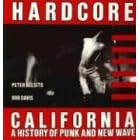
i have been staring at this all week, remembering that this is how i found out about a lot of women-in-punk that i had missed out on in the 80's or had little knowledge of...not there is a ton of focus on this in the book, but that there are photographs, names...giving proof that women were a part of hardcore
what i hate about hardcore today, is how women's role in it hasn't seemed to change. you will still find very few female guitar players or singers in hardcore and a whole lot of bass players. there are not that many all female punk bands that are considered to be hardcore, but there continue to be a handful of groups who last for a short time and maybe make a demo tape. there are still a lot of women behind the scenes, putting on shows, taking pictures, putting together zines, cooking dinner for bands and all that.
hardcore reinvents itself over and over and over again, but the formula doesn't change and girls stay on the sidelines.
why?
if girls started to take over hardcore, like they started to take over rock-n-roll in the early 90's, would everyone declare hardcore to be dead and move on to indy, pop, drum and bass, noise or electro-clash? if so, how long would we have to wait for hardcore to be legitimate again? 10 years, 20 years?
Wednesday, March 4, 2009
torah reading, redux
Here is the beginning of my post. And here is the rest of it.just wanted to give an update on my torah reading. i added a couple books of commentary and am now listening to daily torah commentary podcasts on the same subject as what i am reading that day. it is a crazy discipline to keep up but i find it really interesting and provoking.
Monday, March 2, 2009
Punk rock: so what? edited by Roger Sabin
So this book bills itself as being a collection of essays about the cultural impact of punk, really the majority of the book talks about the sex pistols, which I get, because I realize that they tend to be THE punk band, you know what I mean? Like when mainstream culture thinks of punk they think of them. The problem with that being is I personally haven't really cared about the sex pistols since I was 12. It's interesting to read ideas of how they've influenced contemporary art and film, but at the same time a lot of it reads like a boner for the pistols record review. Oh, and it's a book out of england, so it's more in the context of the culture of england rather than the culture of the U.S. (duh). As far as the essays not about the sex pistols are concerned, a lot of them were really interesting. There were a couple about fashion and all the commodification that came with it, the differences between small town punks and city punks, there was one essay I really liked that talked about racism in punk and how there is this legacy of rock against racism and all that and this mythology that all that late 70's english punk was anti-racist but then has instances and examples of times when those bands or people did say and do fucked up things, and how there are all these anti-racist bands now that are influenced by that time period but how there are bands from that time period who basically started the trend of skinheads listening to punk.
Anyway, the book is split into two parts, the first being more about visual art culture, films, comic books, literature and the like and then the second half is about fashion and racism and current music and politics. I kind of spent the first feeling like they were streching it in trying to prove their points and that it was some space to talk about how great the sex pistols were, but for the most part I really liked the second half.
Anyway, the book is split into two parts, the first being more about visual art culture, films, comic books, literature and the like and then the second half is about fashion and racism and current music and politics. I kind of spent the first feeling like they were streching it in trying to prove their points and that it was some space to talk about how great the sex pistols were, but for the most part I really liked the second half.
Sunday, February 22, 2009
Chick Flicks by B. Ruby Rich

A few months ago I checked out a bunch of books on women and film from the library, Chick Flicks: Theories and Memories of the Feminist Film Movement by B. Ruby Rich being one of them. Since I was reading through a bunch of books at once (as usual) I am not sure which one is which, but recently a group of feminist readers in Olympia have started reading this one together and holding illicit late night screenings downtown. Last night we saw Das Blaue Licht (d. Leni Riefenstahl). If you'd like you read along, Kanako is in charge and I hear there might be another blog starting up...

Happy Chinese/ Lunar New Year...
Some of my favorite things I've read over the year
OR Re-read classics...
Space and Geometry (Mach)
All the Kings Horses (Michele Bernstein)
The Tiger in the House (Van Vechten)
The Mikado's Empire (Griffis)
Ezra Pound: Selected Cantos
The Uncertain States of America Reader
Selected Writings (Marx)
The Culture Industry (Adorno)
The Shape of Time (Kubler)
The Book of Intentions (F.R. David)
Charlotte Perriand, A Life of Creation
New York Times, op-ed
Old Possum's Book of Practical Cats (T.S. Eliot)
Against Fashion (Stern)
Some Social Implications of Modern Technology (Marcuse)
Irrational Modernism (Jones)
Make Your Own Life: Artists in and out of Cologne
Reena Spaulings (Bernadette Corporation)
The Aesthetics of Disappearance (Virilio)
Letters and correspondence between Ezra Pound and Wyndham Lewis @ Beinecke Library
Who Wants To Read Transnational Feminist Theory?

Yesterday I was checking out Zed Books and decided I want to read more transnational feminist theory If you are interested in this, let me know and we can discuss it here. I am going to read this first: Feminism and War: Confronting U.S. Imperialism It's not at any of the libraries here so I'm gonna order it. I guess this will be the book for March. Let me know if you're in...
Books Books Books

Hello Bumpidee Readers...
I read so much crap in the past six months that I was kind of embarrassed to even list it here. Then I was like, why am I reading crap? Why not just read better books, and that led me to a kind of reader's block. Let's see the last crappy novel I remember not wanting to post about here was The Secret Life of Bees, which is really just not a good book and I have nothing to say about. I read it because two different people sent it to me in the mail and because I was supposed to see the movie with my grandma and so I figured I might as well read the book first. Well it's very Christian, so I guess that is part of its appeal for some people.
Uh what else? I was reading a lot of books that were slut memoirs, seriously weird genre. Like where the female writer confesses all the bad things she did as a young woman and sort of analyzes it in a moral way that is slightly feminist but more often self-help-y and titillating. I enjoyed reading them because they are so weird and I thought I'd have something smart and analytical to say, but I really ended up just feeling kind of headache-y and gross when I was done, like I had just read a salacious gossip-y Hollywood exposé, except these were by people I have no reason to be interested in. The one I recall best is called Loose Girl: A Memoir of Promiscuity by Kerry Cohen, who also wrote Easy, a young adult novel about a girl with a bad reputation that I've been meaning to read. Loose Girl is one of those "poor little rich girl" tales of a party girl of privilege who hates herself. I don't really buy it when she says she regrets all of her sexual exploits, it sounds like she had fun and then regretted it later. Or maybe that she has low self-esteem and didn't know how to have fun. Either way, it's really not that interesting, but I still wanna check out Easy, because I think writing novels about girls getting bad reputations for teenagers to read sounds more compelling. It seems that she may have written Loose Girl as a way to promote her young adult fiction.
I can't remember where my reading took me after that exactly, but I re-read Pride and Prejudice after watching the BBC mini-series and the Hollywood version from 1940 starring Laurence Olivier.
Then watching the Lord Peter Wimsey series got me back into Dorothy Sayers, so I checked out her biography by Barbara Reynolds. It turns out she was a Christian humanist, as well as one of the world's leading Dante scholars and that writing popular detective mysteries was what she did in her spare time. If you read any of her detective novels, I recommend Gaudy Night, starring Harriet Vane. It's a really great mystery, partially because Harriet Vane is such a great female character.
I also read a little bit of Mrs. Woolf and the Servants: An Intimate History of Domestic Life in Bloomsbury by Alison Light, which asks the question--what were the role of servants in Virginia Woolf's life and how does that relate to her as an artist. Hopefully I'll finish it...to ask the question complicates Woolf's feminism--did her female servants have "rooms of their own" for example? Did her feminism reach that far, or was it just for white, upper class/upper middle class women like herself?
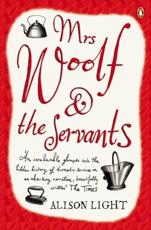
I was drawn to this after reading Coco Fusco's A Field Guide for Female Interrogators, which probably deserves it's own post...it is a component of a larger feminist art piece of hers that asks 'what is the role of women in war'? Since Virginia Woolf famously addressed this question in Three Guineas, Fusco frames her book as a letter to Ms. Woolf, getting her up-to-date on how women's role in war has changed in the 21st century, focusing on the role of the female interrogator at Abu Ghraib...if that sounds compelling it really is. Who can pretend that American women are innocent and powerless and that war is waged soley by men in light of their participation in the "war on terror"? Fusco argues compellingly that we can't and that in fact to do so is to fail to explore how gender/power/nation intersect and function at the level of international affairs. She's basically asking the same questions feminist theorist Cynthia Enloe asks, but from the point of view of a performance artist who is familiar with literary criticism. Her question resonates and explores what it means to be female and how systems of power operate in the 21st century.

Last night I started reading Straight from the Source by Kim Osorio, a music journalist who used to be editor-in-chief of The Source and famously sued for sexual harassment. So far it's a compelling tale of a woman inside the Hip Hop side of the music business who demands to be treated as an equal and hang out on her own terms. As with any male-dominated music scene, this is a struggle for dignity and respect. She wants to be taken seriously but she also likes to have fun. It starts out where she already has a "bad reputation" and then back tracks to explore, from her point of view, what that really means. There's also a lot of inside stories about famous Hip Hop battles between late 90's/early 00's NYC artists, so it's pretty entertaining as a music book as well.

There's more....expect reviews of The Cramps: A Short History of Rock'n'Roll Psychosis by Dick Porter soonish.
Saturday, February 21, 2009
vacation reading: modern latino american fiction, WWII thriller, Jane Austen
I guess it's really hard for me to read anything unless I get the fuck out of town. Living in NY and working full time and going to school part time has lead me to basically read the paper, some magazines and school work in addition to a gillion blogs, facebook and twitter. Sad.
Well luckily I'm addicted to the beach so I have been able to keep up with a decent amount of reading over the past year. Here's the latest installment. I didn't finish the last one yet but I'll try to finish it by years end.

The Brief Wondrous Life of Oscar Wao by Junot Diaz
My classmate Vanessa let me borrow this and I enjoyed it mostly until the end. It's a funny depiction of a tragic sad sap Oscar Wao and his Dominican family and all of their comic tragedies, curses and disastrous love lives. It's got a lot of Spanglish and Spanish and I thought a lot while I was reading it that it might be really hard to follow if you didn't have sort of an idea of what was being said. At the end it just sort of dragged on and the characters really were sad and pathetic and tragic and I kind of just wanted it to be over.

Up in Honey's Room by Elmore Leonard
I picked this up on my annual stop to the Cannes English Bookshop. I attend a conference every January in Cannes and a four years ago I found this shop and make it a point to visit every year. I pretty much make a random impulse buy and this year "Up In Honey's Room" was the result. This was the UK edition and it was on the discount table and had a cool cover so it was the winner. I dug the book and it's raunchiness and period thrillerness.

Mansfield Park by Jane Austen
I may have picked up this Signet Classics edition on last years Cannes trip? Anyway, I finally got around to reading it and honestly Jane Austen is sorta tough vacation reading because I really have to concentrate to make sure I know who the hell everyone is. I got about a quarter through it and am into it so far and have it on my nightstand now so I'm gonna try to knock it out. I think on the facebook "which Jane Austen heroine are you?" quiz I was Fanny Price and it makes sense so far.
Well luckily I'm addicted to the beach so I have been able to keep up with a decent amount of reading over the past year. Here's the latest installment. I didn't finish the last one yet but I'll try to finish it by years end.
The Brief Wondrous Life of Oscar Wao by Junot Diaz
My classmate Vanessa let me borrow this and I enjoyed it mostly until the end. It's a funny depiction of a tragic sad sap Oscar Wao and his Dominican family and all of their comic tragedies, curses and disastrous love lives. It's got a lot of Spanglish and Spanish and I thought a lot while I was reading it that it might be really hard to follow if you didn't have sort of an idea of what was being said. At the end it just sort of dragged on and the characters really were sad and pathetic and tragic and I kind of just wanted it to be over.
Up in Honey's Room by Elmore Leonard
I picked this up on my annual stop to the Cannes English Bookshop. I attend a conference every January in Cannes and a four years ago I found this shop and make it a point to visit every year. I pretty much make a random impulse buy and this year "Up In Honey's Room" was the result. This was the UK edition and it was on the discount table and had a cool cover so it was the winner. I dug the book and it's raunchiness and period thrillerness.
Mansfield Park by Jane Austen
I may have picked up this Signet Classics edition on last years Cannes trip? Anyway, I finally got around to reading it and honestly Jane Austen is sorta tough vacation reading because I really have to concentrate to make sure I know who the hell everyone is. I got about a quarter through it and am into it so far and have it on my nightstand now so I'm gonna try to knock it out. I think on the facebook "which Jane Austen heroine are you?" quiz I was Fanny Price and it makes sense so far.
east of eden
portia bought me east of eden so that is what i'm gonna read next. i'm bad at writing reviews but maybe i finally will.
my favorite american novel is "sometimes a great notion."
my favorite american novel is "sometimes a great notion."
Thursday, February 5, 2009
invasion 68, prague
invasion 68, prague
this book is filled with big glossy photos taken over several days in prague in august of 1968 during the soviet occupation. the photos are large and beautiful and disturbing.
the book starts with an introduction that explains some of the events that led up to the occupation and a little bit about what happened during and after. the intro is only a few pages long but the pages are ginormous (because it's a big artsy photobook).
mixed throughout the pages of photos there are also pages of eyewitness accounts, official documents, and slogans that appeared on walls and posters during this time. the slogans are printed in czech and english.
"soviet exports: tanks, lead, death..."
"we do not want russian freedom"
"our dead don't need your wheat"
my favorite part of the text of this book was the part about the ghost town method of resistance to the occupation used by the residents of prague:
"Acting on an appeal from the free broadcast of 'Prague', the legal radio station in the occupied town at the end of Friday, hundreds of thousands of anonymous, unknown people tore down the signs with the names of streets and squares. Plaques with house numbers also disappeared. On some buildings there are no longer even the names of the tenants.... The Prague of names and numbers has become extinct. For the uninvited guests, Prague is a ghost town. Someone who wasn't born here, who hasn't lived here, will find an anonymous city of a million people, in which the occupiers may perhaps find only a wide variety of appeals written in Czech and the Cyrillic alphabet. On the roads we read 'Moscow-1,800 km'. Prague is defending itself. Against the tanks, guns and troops of the occupying forces. Without bloodshed. And against collaborators, who, by assisting in the arrest of honourable people, want to make the nation nervous. Let our watchword be: The
postman will find it, but the bastards won't."
the one problem i had while trying to read this book was a common problem i have with photobooks but it's not one that will make me any less likely to read them... the captions of the actual photos are extremely minimal and many don't have captions at all so the curiosity you feel about, for example, the kid sitting on the curb who has painted a target on her or his back is almost painful. who was that woman in the jackie o suit holding the little girl's hand outside of the bullet-ridden building and what exactly happened there and to them? did that old man actually throw the brick at the tank or was he just waving it in his hand... an angry gesture meant for the soviet soldiers in the tank to see? there are 250 pictures in the book and most of them left me with a hopeless kind of curiousity about the specific stories in them.
i highly recommend this book and i highly recommend getting it from your library since i think it costs about $60 to buy for yourself.


Tuesday, February 3, 2009
Happy Birthday to Gertrude Stein
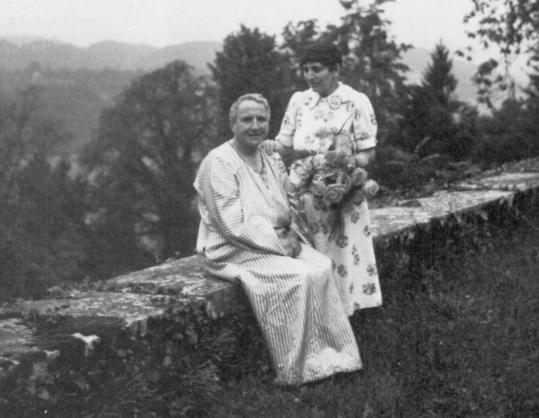
2/3 is Gertrude Stein's birthday. She was born in 1874 and would be 135 years old today. I picked up a copy of Mrs. Reynolds yesterday and plan on voting YES on the library and staying up late reading to celebrate.
Wednesday, January 28, 2009
1984 by George Orwell
I love dystopian fiction. I was reading this at this office I work at and a co-worker saw it and was like "isn't that a book you have to read in highschool or something?" I said yes. "and you're reading it just for fun?" yes. "you're scaring me!" I have no idea what she meant by that. Anyways I told her that I mainly read theory and dystopian fiction and she said she had a book I would love and then gave me a hardcover copy of a supermarket shocker book called toxin. I skimmed it and it was probably the worst book I have ever read in my life. It freaked me out to think the the general populace probably finds that tripe super compelling and a page turner. Is this what people really read? I could go into details, but this is really about 1984, not about toxin. While reading 1984 I kept realizing how much I had made this and brave new world into the same book in my head, the overall theme is similar, but you know, different books.
It was really creepy reading this book and continually comparing it to your normal everyday life and seeing how many parallels there are. I also love how influential this book has been on language, like calling things Orwellian and such. I feel like this is a book that pretty much everyone has read at some point in their lives, and I really like revisiting it, even though it happens to be one of the most depressing books ever.
It was really creepy reading this book and continually comparing it to your normal everyday life and seeing how many parallels there are. I also love how influential this book has been on language, like calling things Orwellian and such. I feel like this is a book that pretty much everyone has read at some point in their lives, and I really like revisiting it, even though it happens to be one of the most depressing books ever.
Sunday, January 18, 2009
what i am reading - the torah
i am trying to go a year reading the weekly torah portion and some commentary on each portion. but i didn't start at the beginning of the hebrew year with genesis. i started with exodus.
anyways, that's what i've been reading and will be reading 3 nights a week for a year.
anyways, that's what i've been reading and will be reading 3 nights a week for a year.
favorite books of 2008
my favorite books i read in 2008 was "marooned in realtime" by vernor vinge and "revelation space" by alastair reynolds. both of them fit into what they might call "hard sf" and involve really really really long timelines that occur over millions of years. marooned in realtime is a murder mystery where the murder is finally solved at the very end of the world.
Saturday, January 17, 2009
My Favorite Books/Blogs/Columnists of 2008.
None of my favourite books of 2008 were published in 2008. Most of them were published long before it. But I still think they are vitally relevant to what happened in 2008- the perpetuation of dehumanizing domination in all its insidious forms- and what should/ has to happen- dramatic/revolutionary change- because they go a long way in describing why and how domination happened and why- but sadly not how- society should change.
Books
Theodor W.Adorno- Prisms, Critical Models, The Culture Industry and Other Essays. The Dialectic of Enlightenment.
Walter Benjamin- The Arcades Project, One-Way Street, A Berlin Childhood, Critique of Violence, Fragment on Capitalism.
Alain Badiou- Polemics.
Guy Debord. Society of the Spectacle.
Frantz Fanon. Black Skins, White Masks. Wretched of the Earth.
Henri Lefebvre. Critique of Everyday Life vol 1,2.
Karl Marx. Capital vol. 1.
Pier Paolo Pasolini. Poems/ Essays/Movies.
I did, however, read blogs and columns published in 2008. In my mind they supplement the books and help me try to understand what is going on and why on a day-to day-basis.
3arabawy http://arabist.net/arabawy/.
Adswithoutproducts http://adswithoutproducts.com/
Antiwar.com
Counterpunch.org
Dead Voles http://carldyke.wordpress.com/
Dissenting Historian http://dissentinghistorian.blogspot.com/
How The University Works http://howtheuniversityworks.com/wordpress/
Infinite Thought http://www.cinestatic.com/infinitethought/index.asp
Institute For Conjunctural Research http://conjunctural.blogspot.com/
James Wolcott’s Blog http://www.vanityfair.com/online/wolcott/
Le Colonel Charbert http://lecolonelchabert.wordpress.com/
Lenin’s Tomb http://leninology.blogspot.com/
Rough Theory www.roughtheory.org
Sit Down, You’re a Bloody Tragedy. http://nastybrutalistandshort.blogspot.com/
Socialism and/or Barbarism. http://socialismandorbarbarism.blogspot.com/
Columns by Naomi Klein, John Pilger, Norman Finkelstein, Vijay Prishad, Tariq Ali, Gary Younge, Thomas Frank and sometimes Robert Fisk, Paul Krugman and Bob Herbert.
Thursday, January 15, 2009
Unmarketable by Anne Elizabeth Moore
I realize this has been reviewed already. Whatever. I really like books about marketing theory and analysis and stuff, and I like stuff about what selling out means now, basically totally fascinated by these things. I think I read the article in punk planet that this book grew out of, and I remember it being really amazing. This books use (overuse) of the term "integrity" really got to me but whatever, doesn't really matter, maybe I'll go into that later.
First of all, I would like to point out that D.I.Y. and underground media existed long before me, and that it's possibly romanticized heydays occurred before I came of age, so I just have this weird idea that "not selling out" was more important at some point, and that surviving (paying rent and eating regularly at the same time) was easier without a job at some point and that touring was not such a gaping financial drain at some point. Ok, so these are the ideas I function off of, but I was fully not there so I don't know.
Anyway, the first thought off of the top of my head is that I found it interesting that the artists she spoke to that had participated in corporate marketing are (I'm pretty sure) artists that are attempting to make a comfortable living off of their art and not holding a day job. In this sense, in the original sense of "not selling out" and integrity, these artists "sold out" or whatever when they decided they wanted to make a living off of their art. I didn't feel like this was fully pointed out, and it really changes the context of a lot of the ideas written in this book. It seemed like the idea of what integrity is is pretty well defined in the beginning as something that comes from a burning desire to create, and I'm not saying the artists she talked to don't have an insatiable need to create, but they do definitely want to not have that day job, and they want their craft to pay their bills.
It was interesting to me that the marketing plan case studies gone over in this book were put in the context of being entirely and fully aimed at underground twenty-somethings. My thought on campaigns that are "aimed" at the underground is really much more about helping the mainstream have that bad rebel streak in their life. It doesn't make sense to market to punks really, not to say that it's not working, because I think it is, but the idea of a company putting so much money into an "edge-y" marketing campaign along with the money to be sneaky about it (people do get paid to figure out the best way to make it seem like a corporation is not involved) or whatever just to win over a couple punks is ridiculous to me. Punks are the added bonus. Basically, these type of marketing campaigns that are "just trying to win over punks" are truly built for mainstreamers to have some touch of rebelliousness or hipness in their lives. We're (punks) kind of trendsetters, remember? The theory is this, if you get the punks who are dancing on the line of mainstream edge-y and underground whatever, then all those vanilla folk who want that danger and rebellion and hipness and fuck you to the man in their lives, can have just a little bit. So maybe they'll buy a pabst or something.
The idea that mainstream and D.I.Y. intermingling is a new thing is weird too. It reminds me of some annoying kid in one of my classes that would vocalize about never having heard of major pop culture iconic things. Tobi and I talked a bit about how most punks grew up paying attention to pop culture to some degree, and to act like mainstream and underground are two different planets that have had no interaction until whenever is a little weird.
Also, this is random but that whole major threat ad campaign being explained away as being a marketing plan made by Minor Threat fans to promote something they love - skateboarding - is utter bullshit. I'm not even really a minor threat fan and I could tell you in my sleep that they definitely don't want that iconic image of their band used to shill anything ever, so I have a hard time believing that anyone who was a fan could think that would fly for a second. Bullshit. I mention this because I felt like in the book it's treated as a valid excuse, and not just a valid excuse manufactured by marketing spinners and it's totally bogus.
This whole subject is really complex, it's like when the punks (the band) managed to get sponsored by sparks and all it really meant was that they (sparks) would give us free sparks whenever we threw "warehouse parties" which were really just house shows. We would charge at the door with the promise of bands AND free sparks and then give all the money to the bands. Our whole idea was that we were ripping off sparks, and really we were in a lot of ways, we were paying touring bands decent amounts of money at parties where most likely everyone would have been drinking sparks anyways, but it was still kind of weird. Basically, everyone can come up with an excuse of why participating with corporations is all right, everything from "I loved this when I was a kid" to "wider distribution" to "I need money" and whats a valid excuse and whats not is really vague.
Also, it's important to point out that all these D.I.Y. kids are producing art constantly, and if you want a stable income with benefits that involves doing art? Most likely you are working in advertising.
Thursday, January 1, 2009
What were your favorite books of 2008
Not necessarily published in 2008...but what you read in 2008. I'm compiling a list.
Subscribe to:
Posts (Atom)